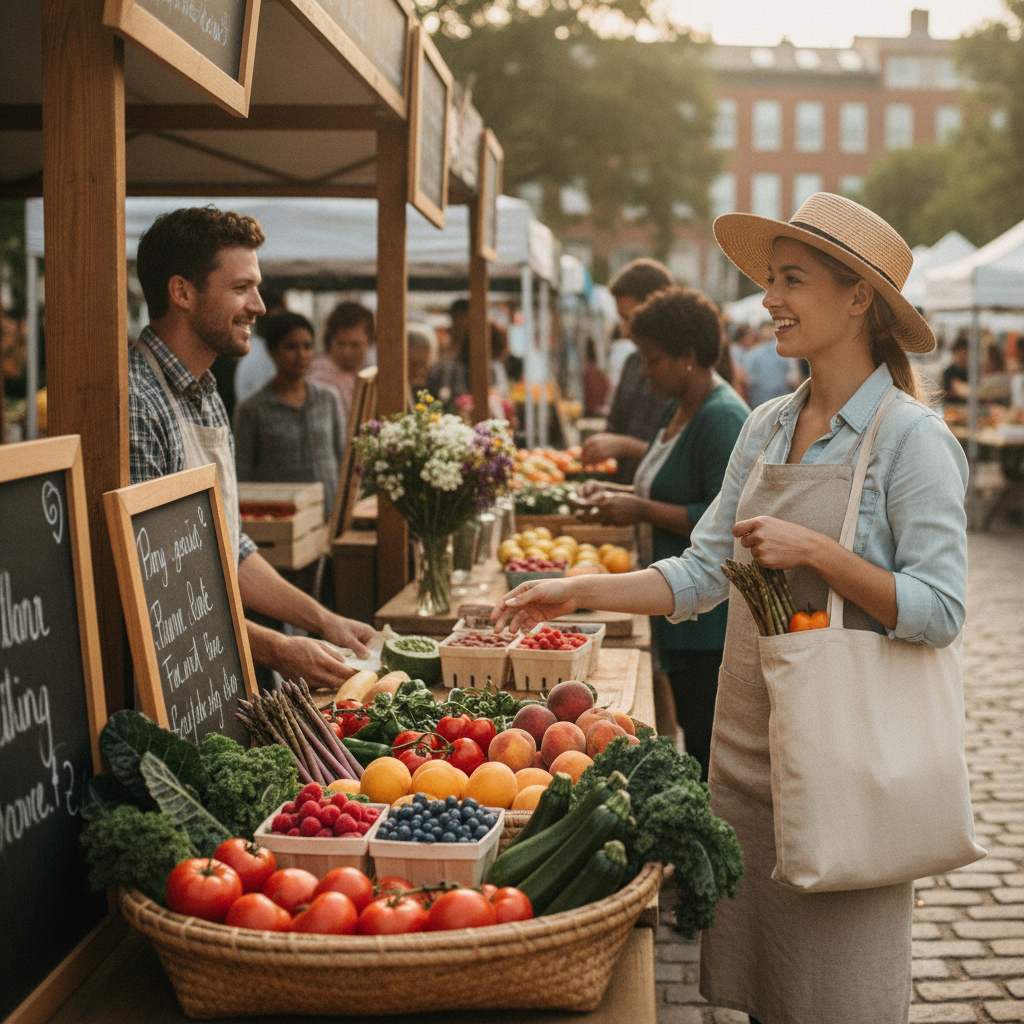
There is a particular rhythm to the way food has always moved through human communities — grown close to home, sold at the height of ripeness, consumed before the season turns. Somewhere along the way, that rhythm got buried beneath the convenience of year-round supermarket shelves stocked with tomatoes in January and strawberries in November. The cost of that convenience, both financial and sensory, is something many households are quietly beginning to reckon with.
The Economics of Eating with the Season
Seasonal produce costs less for a straightforward reason: when a crop is abundant and local, the supply chain shortens dramatically. There are fewer trucking miles from California's Central Valley or Chilean farms, less cold-storage time, and reduced handling at distribution centers. Farmers markets, particularly those run under regional programs like the ones affiliated with the USDA's Farmers Market Promotion Program, bring growers and buyers into direct contact, stripping out the middleman markups that compound at every stage of conventional retail. A basket of summer zucchini or autumn butternut squash purchased at a Saturday market in a city like Portland or Nashville will typically cost meaningfully less per pound than the same item at a chain grocery — not because quality is lower, but because the economics of abundance and proximity simply work differently.
The concept of *terroir* — a French term borrowed from wine culture, meaning the distinct character a food takes on from the land and climate where it grows — matters more than most shoppers realize. Produce picked at full maturity, sold within days of harvest, carries more flavor, more nutrients, and a longer usable life once brought home. A peach that ripened on the tree rather than in a refrigerated shipping container doesn't need to be eaten the same day; it simply tastes like what a peach is supposed to taste like. That quality difference has real household value — less food goes to waste, which means the effective cost per meal drops further than the sticker price alone suggests.
Building a Market Habit That Actually Sticks
For families and individuals who've grown accustomed to the one-stop convenience of stores like Kroger or Whole Foods, shifting even a portion of grocery spending toward farmers markets requires a small but real adjustment in mindset. The market doesn't offer everything; it offers what's ready. That constraint, which can initially feel like a limitation, tends to become a creative prompt over time. Cooks who shop this way naturally start building meals around what's available rather than shopping to execute a predetermined recipe. It's a practice sometimes called *market cooking* — a loose, improvisational approach to meal planning that reduces over-purchasing and makes better use of whatever is abundant and affordable that week.
Practical tools help ease the transition. Apps like Farmstand and local community boards on platforms such as Nextdoor often list what's in season at nearby markets before the weekend arrives. Planning even loosely around that information — knowing that sweet corn will be plentiful in August or that winter squash will dominate October tables — allows shoppers to build flexible weekly menus that lean into low-cost, high-quality ingredients without requiring rigid advance planning.
What Gets Sacrificed, and What Doesn't
The honest trade-off with farmers market shopping is selection, not quality. Year-round availability of every fruit and vegetable is a feature of industrial grocery retail that most people have come to treat as a baseline expectation. Letting go of that expectation doesn't mean eating poorly — it means eating differently, and often better. A household that loads up on peak-season blueberries in July, freezing what can't be used immediately, will have higher-quality fruit through the fall at a fraction of what it would cost to buy off-season berries imported from South America.
The practice of preserving — whether through freezing, simple refrigerator pickles, or canning — has seen a genuine revival among budget-conscious home cooks precisely because it stretches the value of seasonal buying across months rather than days. A single afternoon's effort turning a flat of market tomatoes into sauce or crushed tomatoes pays dividends through the winter in both savings and flavor. This kind of thinking, sometimes called *pantry economics*, reframes grocery spending as something that happens across a season rather than week to week.
Making the Most of Your Market Visits
When you start approaching farmers markets as a primary rather than supplemental source of produce, a few habits make a significant difference. Arriving in the final hour before closing often means vendors are willing to negotiate on bulk quantities — a box of slightly imperfect peaches or a bundle of greens that won't keep until next week. Bringing reusable bags, cash, and a rough list of what you're open to buying (rather than what you must buy) keeps the experience flexible and efficient. Talking to vendors about what they expect to have in coming weeks costs nothing and often reveals which items will be particularly abundant — and therefore particularly affordable — in the near term.
Building relationships with specific vendors over a season also tends to yield informal benefits: a heads-up about an unusual harvest, a small sample of something new, or a standing discount for regular customers. These aren't guaranteed, but they're a natural byproduct of participating in a market community rather than simply transacting within it. The social dimension of farmers market shopping is part of what makes it sustainable as a long-term habit rather than a short-lived experiment.
There's something quietly radical about returning to a pattern of eating that asks the calendar to set the menu. The household that plans its meals around what's thriving in the ground nearby — what's genuinely ready, genuinely local, genuinely priced for what it is — finds that the grocery bill and the quality of the table don't have to pull in opposite directions. The rhythm that once governed how communities fed themselves still works. It simply requires choosing it.