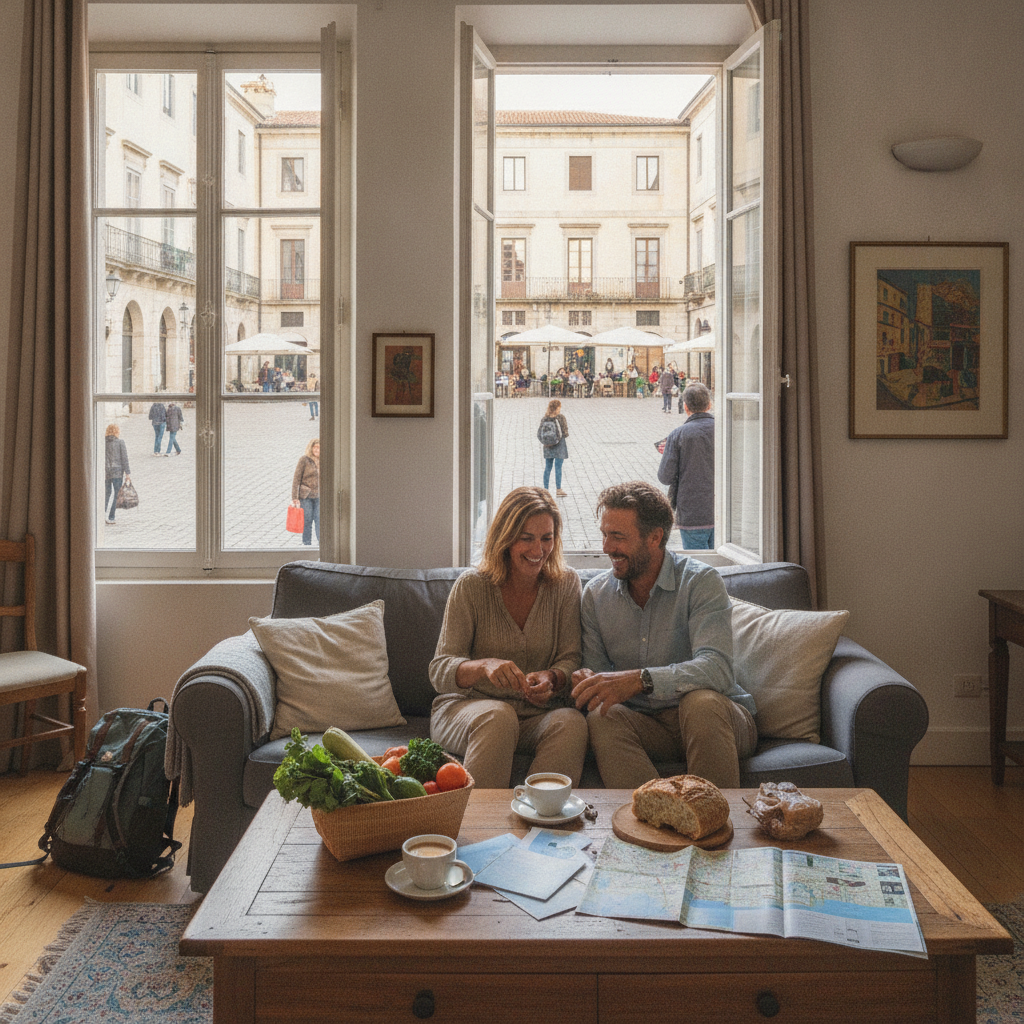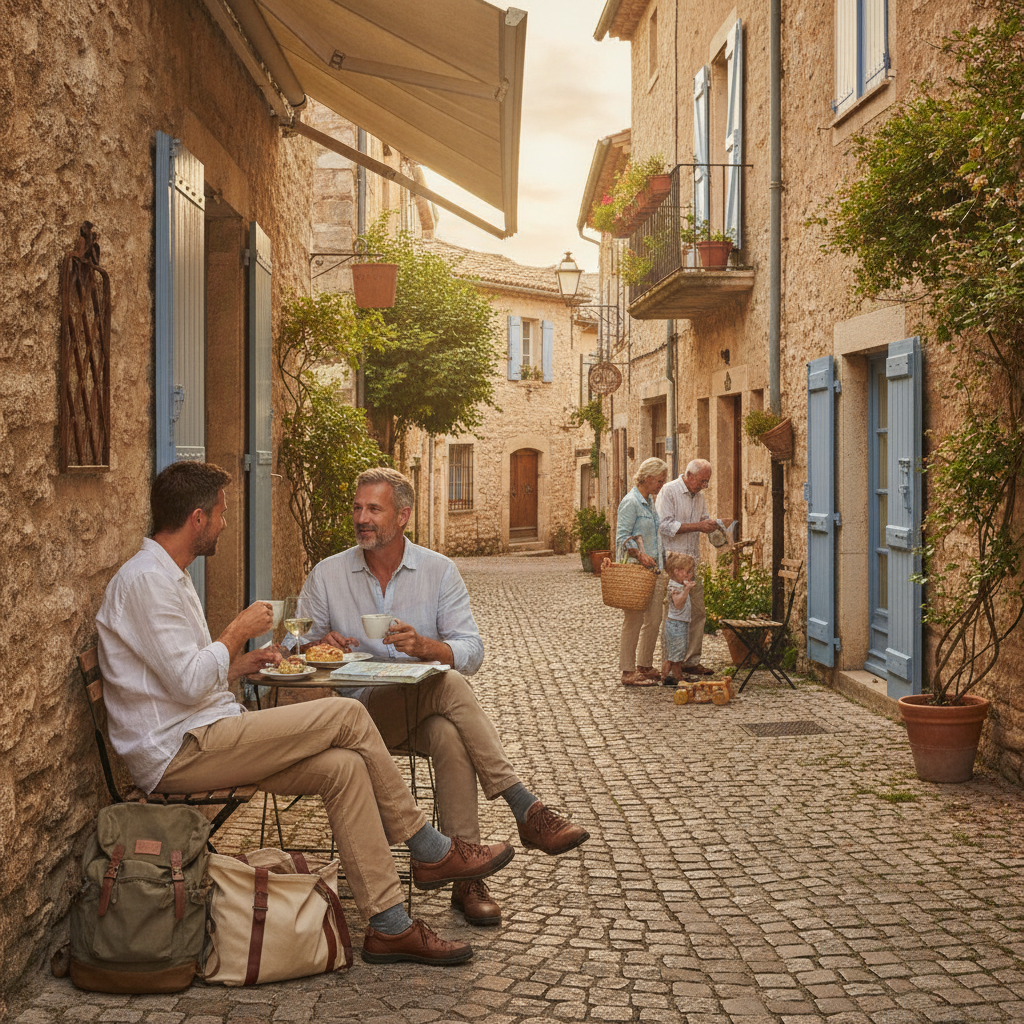
There is a particular kind of exhaustion that comes not from too much walking, but from too much moving — the specific weariness of a traveler who has checked into five hotels in ten days and can no longer remember which city held the beautiful old market square. The rapid multi-city itinerary has become a kind of cultural default, propelled by the logic that more destinations means more value. But seasoned travelers increasingly find the opposite to be true: that slowing down in a single region for two weeks tends to cost less, feel richer, and leave a more lasting impression than the frantic circuit of capital cities and famous landmarks.
The Real Economics of Staying Put
Transportation is one of the most quietly expensive elements of any trip, and rapid itineraries multiply those costs in ways that are easy to underestimate during the planning phase. Every intercity train, budget flight, or rental car transfer carries not just a ticket price but also the associated costs of luggage handling, airport meals, and the inevitable taxi from a peripheral station to a central hotel. A traveler spending two weeks in, say, the Languedoc region of southern France — moving between Montpellier, Nîmes, and a handful of smaller villages — will likely spend a fraction of what someone spends bouncing between Paris, Amsterdam, Prague, and Lisbon in the same period. Accommodation economics shift as well: weekly rates at guesthouses and vacation rentals are almost always meaningfully lower than nightly rates, and having a kitchen eliminates the daily restaurant dependency that inflates budgets more than most travelers anticipate.
Beyond the arithmetic, there is a subtler financial advantage to staying in one place. The slow traveler develops what might be called *marché* wisdom — a French term loosely meaning marketplace knowledge — the kind of local familiarity that leads to discovering the Thursday farmers market, the neighborhood trattoria that doesn't appear in any guidebook, and the regional wine cooperative selling excellent bottles at producer prices. These discoveries don't happen on day one, and they never happen at all when a traveler is perpetually arriving and orienting themselves in a new place. The savings accumulate not through discipline but through proximity.
What Depth Reveals That Speed Cannot
There is a phenomenon that frequent travelers recognize but rarely name: the difference between visiting a place and beginning to understand it. In a two-week stay within a single region, the texture of daily life starts to become legible. A traveler in Oaxaca for a fortnight will start to notice the rhythm of the tianguis — the rotating outdoor markets tied to the Zapotec calendar rather than a standard weekly schedule — in a way that a three-day visitor simply cannot. The afternoon light on the zócalo, the central plaza, changes from novelty to familiarity. The cobblestone streets that seemed uniformly picturesque on day two reveal distinct neighborhoods, distinct social patterns, distinct histories by day ten.
This depth has practical value beyond the philosophical. Understanding a region's geography means making fewer costly mistakes — taking the slow bus when the express exists, paying tourist prices in areas a local would never shop, booking a restaurant that survives entirely on first-time visitors. The slow traveler's growing fluency in a place functions as a form of ongoing savings, the kind that compounds quietly over the duration of the trip.
The Psychological Case for Stillness
Rapid travel is often defended as maximizing experience, but there is good reason to question whether accumulating locations is the same as accumulating meaningful experience. The constant stimulation of new cities — new transit systems, new currencies, new social norms to decode — creates a cognitive load that leaves many travelers feeling, paradoxically, like they didn't fully arrive anywhere. Slow travel resolves this by allowing genuine psychological settlement. The mild low-grade anxiety of perpetual transit gives way to something closer to ease, and in that ease, attention opens.
Apps like Rome2rio and Omio are genuinely useful tools for regional transport planning, and they reveal something instructive: regional day trips from a single base are almost always cheaper and easier than repositioning entirely. A base in the Peloponnese, for example, allows access to Nafplio, Mystras, and Epidaurus without ever hauling luggage onto another bus. The traveler comes home each evening to the same room, the same corner café, the same evening walk — and those repeated experiences accumulate into something that feels less like tourism and more like living.
Building a Slow Itinerary That Works
For those considering this approach, the planning shift is less dramatic than it might seem. Rather than building a list of cities, the slow traveler builds a list of experiences, textures, and questions — what does this region's cuisine actually look like beyond the famous dishes, what is the local relationship to the landscape, where do people go on Sunday afternoons? A base accommodation is chosen first, ideally something with a kitchen and enough space to spread out, found through direct owner contact or platforms that allow longer-stay discounts.
From that base, a loose framework of day trips and explorations takes shape, deliberately unscheduled enough to accommodate the unplanned discoveries that tend to be the most memorable. The Airbnb host who recommends a cliffside trail not listed anywhere. The weekly market in a village twenty minutes by local bus. The afternoon that stretches into evening conversation with the family who runs the small hotel, their children doing homework at the kitchen table while dinner is prepared. These moments are not accidental — they are the natural consequence of being somewhere long enough for it to begin to know you back.
When you begin to plan a trip through this lens, the question changes from *how many places can I fit in* to *how deeply can I know one place*. That reframe tends to produce a more honest budget, a less exhausting itinerary, and a richer return on the time and money invested. The suitcase stays in the corner. The rhythm of a region becomes familiar. And what comes home with the traveler is not a checklist of landmarks, but something closer to a genuine memory — the kind that doesn't require a photograph to hold its shape.