The most memorable journeys are rarely the ones that cover the most ground. There is a persistent assumption in modern travel culture that more destinations equal more value — that a two-week trip should involve as many cities, transit connections, and Instagram-worthy landmarks as can be physically managed. Travelers who have pushed back against that assumption, choosing instead to settle into a single region for the full duration of their trip, tend to return with something richer than a highlight reel: a genuine sense of place, unexpected friendships, and a travel budget that arrived home largely intact.
The Hidden Cost of Constant Movement
Every city transition in a multi-stop itinerary carries a financial toll that rarely appears in the initial planning spreadsheet. Train tickets, airport transfers, last-minute accommodation upgrades when the budget hostel is fully booked, and the near-universal tendency to splurge on meals after an exhausting travel day — these costs accumulate with quiet efficiency. Travelers who linger in one region, by contrast, negotiate weekly rental rates, learn which local markets offer the best value, and stop paying the premium that comes with being obviously new in town. The economics of familiarity work consistently in their favor.
What Staying Longer Actually Unlocks
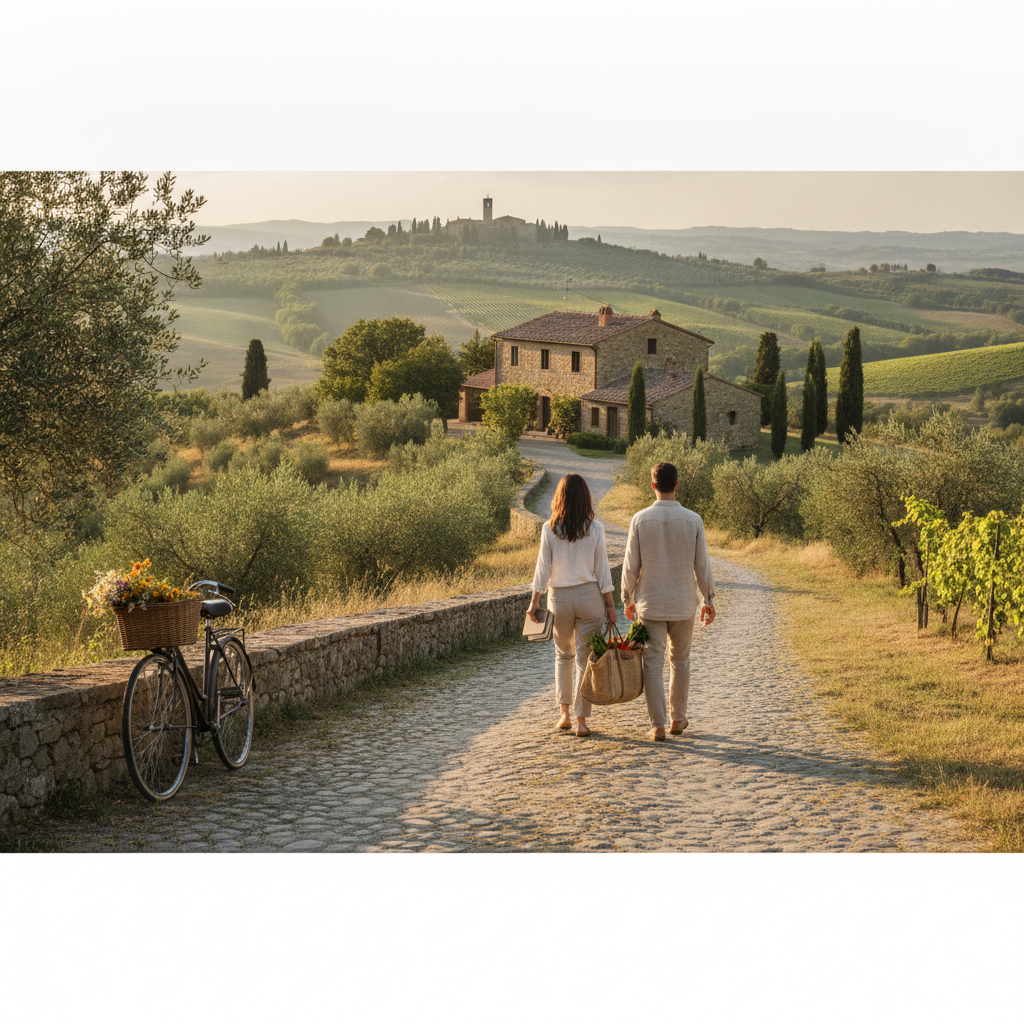
There is a specific rhythm to arriving in a place and staying long enough to feel it shift. In the Umbria region of central Italy, for instance, the difference between a two-night stop in Perugia and a two-week stay spread across Perugia, Assisi, and Spoleto is not simply quantitative — it is qualitative in ways that are difficult to anticipate. The traveler who stays begins to recognize faces at the morning market, learns which *trattoria* (a casual, family-run Italian restaurant) skips the tourist markup, and earns the quiet privilege of being treated less like a visitor and more like a temporary neighbor. That shift changes everything about how a place is experienced.
The Psychology of Unhurried Exploration
Rapid itineraries impose a particular kind of low-grade anxiety — the constant awareness that time is running out, that the next departure is looming, that every afternoon spent simply sitting in a square is an afternoon not spent at a museum or monument. Slow travel dissolves that pressure. When two weeks are anchored to one region, a rainy afternoon becomes an invitation rather than a setback. Travelers find themselves wandering into smaller towns, accepting spontaneous invitations, and making the kinds of discoveries that no guidebook could have predicted. The absence of urgency turns out to be one of the most valuable things a trip can offer.
Accommodation and the Art of the Weekly Rate
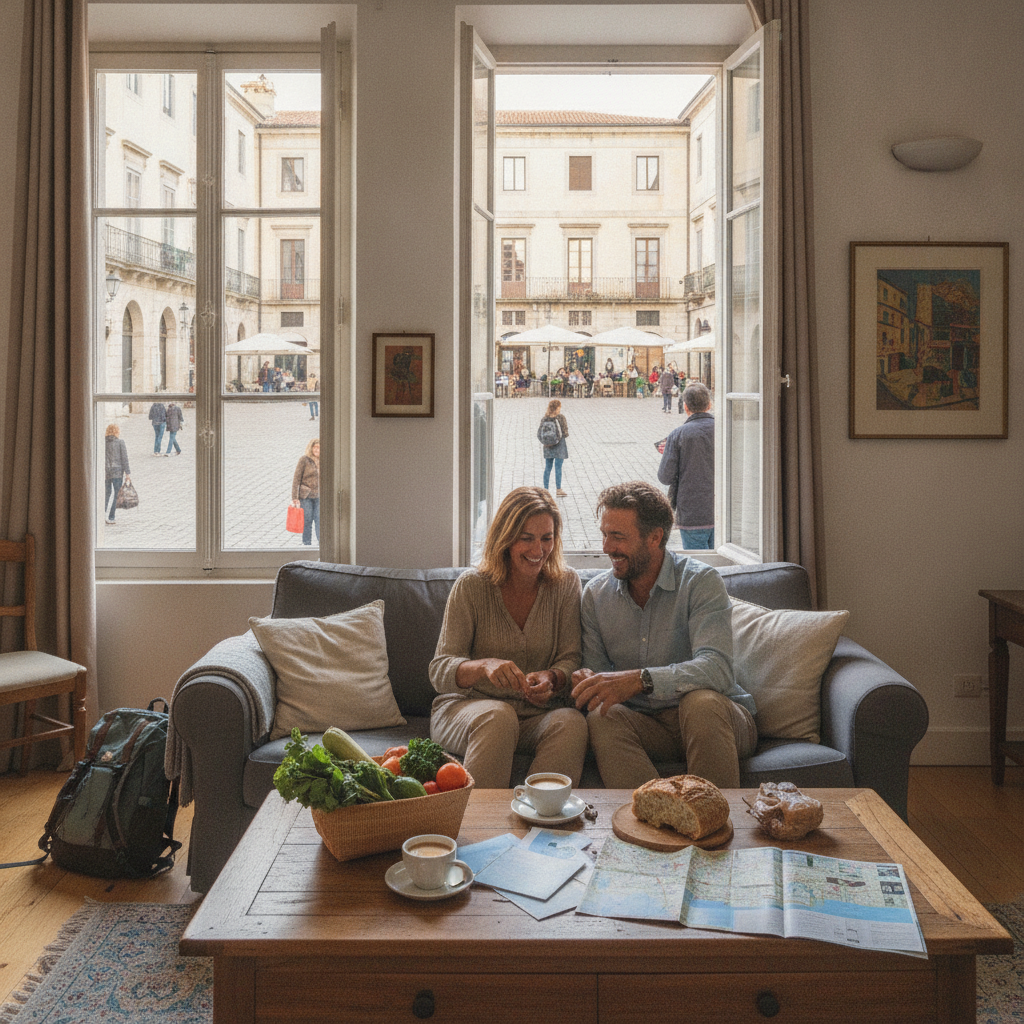
Platforms like Airbnb and VRBO are structured to reward length of stay, and that reward can be substantial. Hosts who list properties in rural Provence or the Basque Country — the latter being a culturally distinct region spanning northern Spain and southwestern France — routinely offer weekly and biweekly discounts that bring nightly rates well below what a standard hotel in any nearby city would charge. Beyond price, a rented apartment or farmhouse transforms the nature of the stay itself. Access to a kitchen means that meals, groceries, and local wine from a village shop replace the daily restaurant bill that inflates even a modest multi-city budget. The accommodation becomes a base rather than a stopover.
Reading a Region Rather Than Skimming It
Every region carries its own internal logic — a particular relationship between landscape, cuisine, dialect, and history that reveals itself slowly and rewards patience. In Oaxaca, Mexico, the relationship between the surrounding valleys, the ancient Zapotec ruins at Monte Albán, and the city's renowned *mole negro* (a complex, dark chile-based sauce central to the region's culinary identity) is not something that can be absorbed in a weekend. Travelers who spend two weeks moving through Oaxaca's smaller villages, attending local markets, and cooking with ingredients sourced from the same farms that supply the city's restaurants develop a contextual understanding that transforms the experience from tourism into something closer to cultural literacy.
The Social Economy of Familiarity
One of the underappreciated dividends of slow travel is the social access it creates. Shopkeepers, café owners, and local guides operate differently with travelers they have seen before. A traveler who returns to the same bakery in San Sebastián for four mornings in a row is no longer a stranger — and that small shift in status opens doors that a one-night visitor cannot reach. Recommendations become more candid, prices occasionally more generous, and conversations more substantive. The social texture of a place, which is often its most compelling feature, becomes accessible only to those who stay long enough to be recognized.
Choosing a Home Base With Intention
For those ready to commit to the slow approach, the single most important decision is selecting a region with genuine depth — one that offers enough internal variety to sustain two weeks of curiosity without requiring a flight or a long-distance train to reach something new. The Dordogne valley in southwestern France, the lake district of northern Patagonia, and the Oaxacan highlands each offer this kind of layered richness. Proximity to smaller towns, access to local markets, and a range of accommodation types at different price points are the practical criteria worth weighing. The goal is a region that functions like a world unto itself — one that asks to be read carefully rather than photographed quickly and left behind.
The original observation holds: the most memorable journeys are rarely the ones that cover the most ground. Slow travel through a single region doesn't ask travelers to sacrifice breadth — it asks them to trade the illusion of breadth for something more durable. The traveler who spends two unhurried weeks in one place returns with a different kind of story, one built from accumulated small moments rather than a sequence of landmarks. That story tends to be the one worth telling.