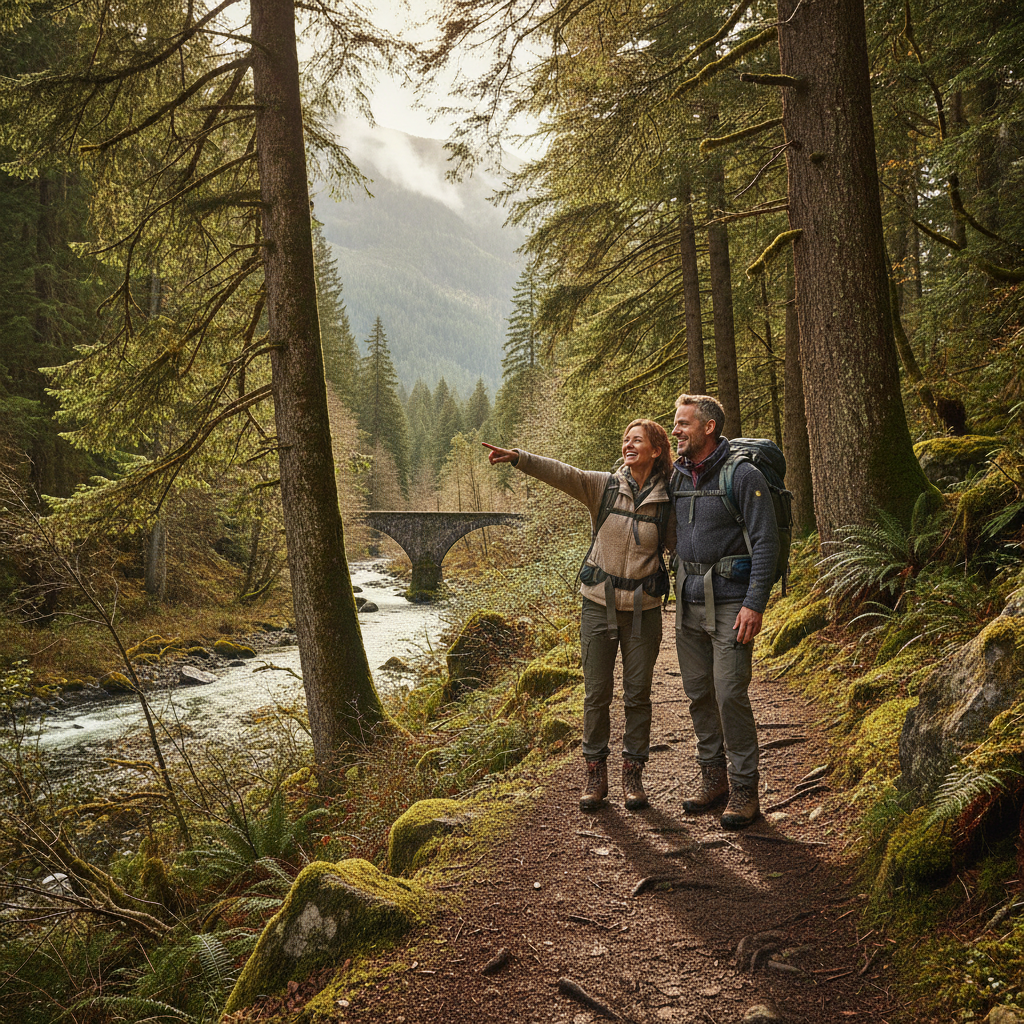
Modern life has a quiet tendency to shrink the world down to the dimensions of a room. Between remote work, streaming, grocery delivery, and climate-controlled spaces, it becomes entirely possible to pass through several days — sometimes an entire week — without ever truly inhabiting the outdoors. Not just stepping outside briefly, but actually being present in it, attuned to its textures, its sounds, and its slow seasonal shifts. The erosion happens so gradually that most people don't notice until they realize they couldn't name what the trees in their neighborhood look like right now, or which direction the wind tends to blow in early spring.
Recognize What Indoor Routines Quietly Take Away
The loss isn't dramatic. There's no single moment when a person stops connecting with the environment around them — it simply fades through repetition and convenience. Daily routines become so optimized for efficiency that they leave no room for the kind of aimless, sensory attention that being outdoors naturally invites. When every commute involves headphones and every break involves a screen, the brain stops registering the outdoor world as a place worth noticing. Over time, the neighborhood, the park, the tree-lined street — all of it becomes mere backdrop rather than something a person actually inhabits.
The Seasonal Drift Most People Don't Notice
One of the clearest signs that an indoor routine has overtaken a person's relationship with their surroundings is a loss of seasonal awareness. When spring arrives, someone deeply connected to their environment notices the specific quality of light that changes two to three weeks before the temperature does. They observe which plants emerge first, how birdsong shifts, how the air smells different in the mornings. That attentiveness doesn't require expertise — it only requires regular, unhurried presence outside. Without that presence, seasons become abstractions defined by calendar dates rather than felt experiences.
Choose One Commitment and Make It Non-Negotiable
The mechanism that makes a single weekly outdoor commitment so effective is its non-negotiable quality. Optional activities get displaced by urgency. Non-negotiable ones don't. The specific nature of the commitment matters far less than its consistency — a two-hour Saturday morning walk through a local trail system works just as well as a weekday evening visit to a neighborhood park, provided the person actually shows up every week regardless of weather, mood, or competing plans. That reliability is what gradually rebuilds the physical attentiveness that indoor routines erode, because it refuses to let convenience become an excuse.
Timing the Commitment to Fit the Season
In warmer months, early morning is often the most rewarding window — light is softer, wildlife is more active, and the outdoor world feels less crowded with human activity. As autumn settles in, midday light becomes genuinely beautiful in ways that summer's harsh brightness obscures. Winter outdoor commitments require a different kind of intention: layering appropriately, choosing routes that feel manageable in cold, and accepting that the experience will be quieter and starker than other seasons. Apps like AllTrails and Komoot make it straightforward to identify local routes suited to any season, offering trail conditions, elevation, and community notes that remove the uncertainty that sometimes prevents people from going out at all.
Use Simple Tools to Build the Habit Reliably
Technology tends to get blamed for pulling people indoors, but several platforms are genuinely useful for structuring an outdoor habit rather than replacing it. Merlin Bird ID, developed by the Cornell Lab of Ornithology, turns any outdoor session into a low-effort exercise in local species recognition — a practical way to deepen environmental attention without requiring any prior knowledge. Seek, from iNaturalist, does the same for plants and insects, identifying what the camera points at and quietly building a person's awareness of what actually lives in their local environment. These aren't meant to replace the unstructured experience of being outside, but they offer just enough structure to keep the habit engaging through seasons when the outdoors feels less immediately inviting.
Keeping a Light Record of What You Observe
One of the most effective ways to sustain a weekly outdoor commitment over months rather than weeks is to keep a simple record — not a detailed journal, but a brief note of what was observed, what the weather felt like, and what stood out. Over time, this record becomes a personal seasonal map of a specific place. A person who has been walking the same stretch of a local greenway every week for a year begins to notice patterns invisible to someone passing through only occasionally: which corner floods first after rain, where deer are most likely to appear at dusk, how the light through a particular stand of trees changes from month to month. That accumulated knowledge deepens the relationship with a place in ways that no single visit can.
Let the Environment Become Genuinely Familiar
Familiarity with a local environment isn't built quickly, and it can't be rushed by intensity alone. A single long hike in a national park, while valuable, doesn't create the same kind of rootedness as fifty consecutive weekly visits to a neighborhood trail or city park. Repeated, gentle exposure across time is what allows a person to notice change — and noticing change is the foundation of actually knowing a place. The goal of a weekly outdoor commitment isn't exercise, though that often follows. It's re-establishing the kind of environmental literacy that most people had naturally as children, before efficiency and routine redesigned how time gets spent.
When Conditions Feel Like an Obstacle
Weather is the most common reason people cancel an outdoor commitment, and it's worth reframing what counts as acceptable conditions. A walk in light rain is a genuinely different sensory experience than a walk in sunshine — the smell of wet earth, the way sound changes, the absence of other people. Late autumn and winter outdoor time, though less obviously comfortable, often produces the clearest sense of being physically present in a season that indoor life makes easy to ignore. Committing to going out regardless of conditions — with the right gear, which doesn't require significant investment — is part of what gives the practice its value. Consistency across conditions is what makes the relationship with a local environment feel real rather than recreational.
Start Planning This Week's Outdoor Window Now
The relationship between a person and the environment they live in is rebuilt through small, repeated acts of showing up. It doesn't require a dramatic change in lifestyle or a move to somewhere with more obvious natural beauty — most neighborhoods, when visited consistently and with genuine attention, turn out to be far more interesting than a quick glance suggests. The tree that seemed unremarkable reveals a nest in March. The park path that felt generic starts to carry a specific smell in October. This is what weekly outdoor commitment slowly restores: the physical knowledge of a place, built one unhurried visit at a time. The best moment to choose this week's window is right now, before the week's momentum makes the decision for you.