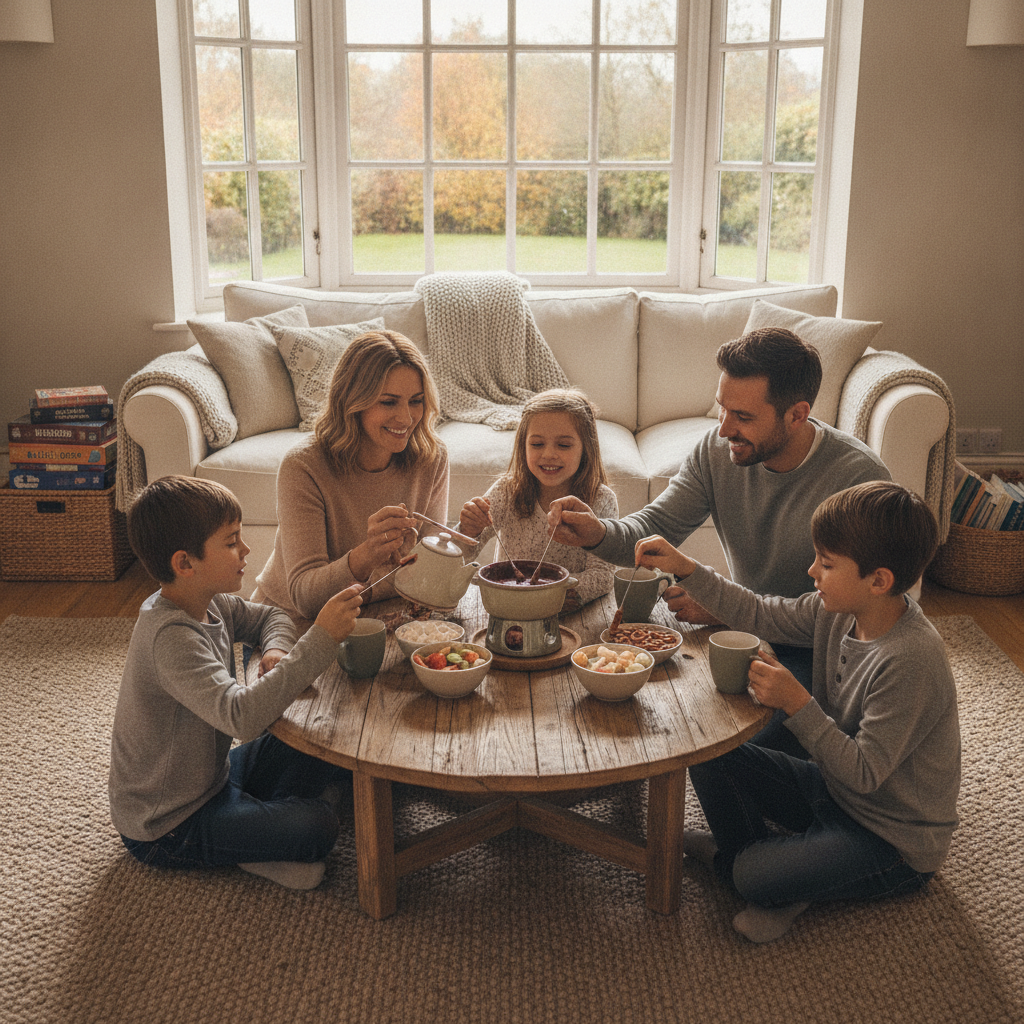
Some of the strongest households aren't built on grand gestures or perfectly planned vacations — they're shaped by the quiet repetition of small, shared moments that return like clockwork with every turning season. There's something particular about a ritual that belongs to everyone in the home, something that doesn't require a special occasion or extra spending, but simply shows up because the calendar says it's time. Over months and years, these recurring moments become a kind of invisible architecture — holding people together even when life gets loud and scattered.
Choose a Ritual That Belongs to Everyone Equally
The most lasting household rituals tend to be ones where no single person carries the weight. When one person plans, prepares, and executes everything while others simply show up, the activity starts to feel like an obligation rather than a bond. A ritual that genuinely strengthens connection is one where each person has a small, natural role — even if those roles shift over time. Think about what already brings your household together without effort: weekend breakfasts where everyone contributes something, an evening walk that nobody has to be talked into, or a seasonal cooking project that everyone has an opinion about. The goal isn't to manufacture togetherness but to recognize and then protect what's already working.
Let the Season Shape the Ritual's Character
Each season carries its own mood, and the most resonant household rituals tend to borrow from that mood rather than fight it. Winter lends itself to slower, warmer activities — a seasonal cooking tradition, a film series watched together over several weeks, or an annual baking day using a recipe that's become uniquely yours. Spring naturally pulls people outward, making it the right time for a shared garden project or a recurring outdoor outing. Summer opens up long evenings for backyard rituals, neighborhood walks, or a standing gathering with close friends. Autumn, with its particular sense of transition, works beautifully for reflective rituals — reassessing the home, reviewing family goals, or cooking something that feels like a celebration of the year so far.
Build the Ritual Around a Fixed Point in Time
What separates a ritual from a random nice moment is its predictability. When something recurs at roughly the same time each season, it starts to function as an anchor — a known point on the calendar that people look forward to and plan around. This doesn't need to be rigid. A ritual that happens on the first weekend of every season, or on the evening of the longest day of the year, or every time the first frost arrives, carries enough structure to feel intentional without becoming a source of pressure. Apps like Google Calendar or Fantastical make it easy to set seasonal reminders that reappear automatically, so the planning burden stays minimal and the ritual itself remains the focus.
Protect the Ritual From Overcrowding
One of the quieter threats to household rituals is the tendency to add more to them over time. What begins as a simple autumn soup-making tradition starts to accumulate — more dishes, more prep, more people invited, more pressure to make it feel meaningful. The ritual eventually collapses under its own ambition, and what was once effortless starts to feel like work. Protecting a seasonal ritual means resisting the urge to upgrade it. Keep it approximately the same size and shape it's always been. The simplicity is actually what makes it work, because simplicity is what makes it repeatable, and repeatability is what gives it meaning.
Use Digital Tools to Plan Without Overcomplicating Things
There's a useful middle ground between doing no planning at all and over-engineering a ritual into a project. A shared household app like Cozi or Notion lets everyone see what's coming without requiring a planning meeting every three months. A seasonal grocery list saved in a notes app means the annual soup, the spring picnic, or the summer porch dinner can be assembled without stress. The planning becomes part of the ritual itself — a light, familiar process that signals the season is arriving. When the friction of preparation stays low, the ritual stays alive, and the household benefits from something that happens reliably rather than aspirationally.
Track the Evolution Over Seasons and Years
Something worth doing occasionally is looking back at how a ritual has changed. A family photo from the same moment each season, a short voice memo recorded on the same evening each year, or even a simple note in a shared app creates a kind of low-key archive that accumulates real value over time. These records aren't meant to be precious — they're just a way of noticing that something is growing. Watching a ritual evolve, seeing how people's roles in it shift as circumstances change, is itself a quiet form of connection. It makes visible the fact that something real is being built, season by season.
Give Each Season Its Own Distinct Character
When each season has its own anchor ritual, the household develops a kind of internal calendar — a rhythm that's separate from the professional calendar of deadlines and obligations. Spring might mean the annual seed-starting afternoon. Summer might mean a standing outdoor dinner on the first warm Friday of the month. Autumn might mean an apple-picking trip followed by a long afternoon in the kitchen. Winter might mean a slow weekend of board games and cooking that stretches across two days. None of these needs to be elaborate. What matters is that each season feels distinct inside the home, and that the people living there associate each one with something they share.
Start With What's Already Present Before Inventing Something New
The temptation when building household rituals is to start fresh — to research ideas, browse platforms like Pinterest or YouTube for inspiration, and design something from scratch. But the more durable approach is usually to look at what already happens naturally and then make it intentional. Is there a walk that happens most Sunday mornings in spring? Name it. Protect it. Let it become the spring ritual. Is there a soup that appears every November? Give it a date, make it a day, and let it recur. Rituals that grow from existing habits require far less energy to maintain and far less convincing to keep alive — because they're already part of how the household actually works.
The opening observation holds: quiet repetition is what shapes a household over time, not the exceptional moments but the reliable ones. A single shared ritual per season is a small commitment that compound slowly, the way most meaningful things do. As the next season approaches, it's worth thinking about what one moment you'd like to anchor your household around — something simple enough to actually happen, and meaningful enough to return to again and again.