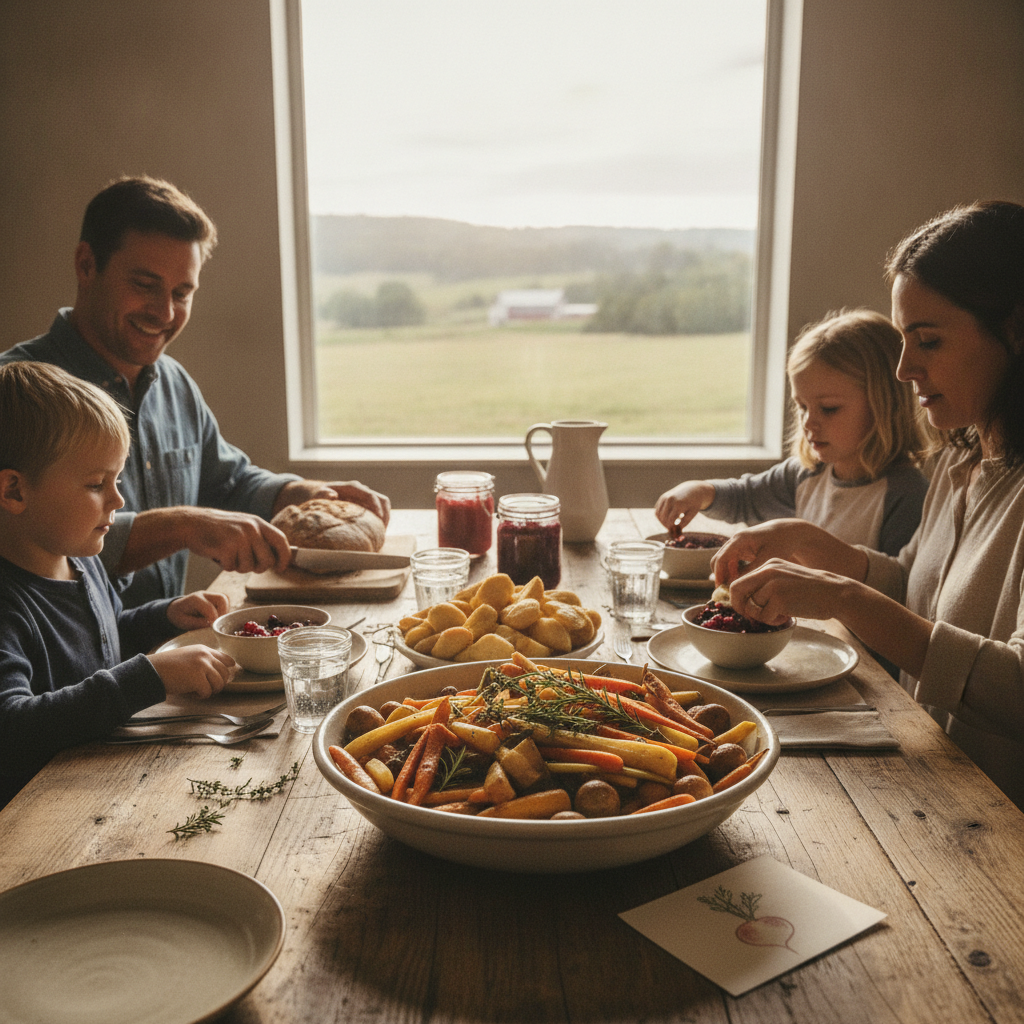
There is something quietly disorienting about eating strawberries in December and butternut squash in June, as though the calendar and the plate have stopped speaking the same language. Modern grocery infrastructure makes nearly everything available at nearly all times, which is convenient but comes at a subtle cost — a slow erosion of the sense that food belongs to a particular moment, a particular place, and a particular rhythm of the year. Households that have started to push back against this blur often find themselves doing something surprisingly simple: choosing one locally sourced ingredient each season and building a shared meal ritual around it.
Anchor Each Quarter to a Single Ingredient
The practice is deliberately modest in scope, which is part of what makes it sustainable. Rather than overhauling the way a household shops or eats entirely, the idea is to identify one ingredient — ramps in spring, corn in summer, apples in autumn, root vegetables in winter — that is genuinely in season and available from a local farm stand, co-op, or farmers market nearby. Apps like Farmish and the LocalHarvest platform make it easier than ever to identify what's growing close to home in any given month. That single ingredient becomes the anchor for a quarterly meal that the household plans together, prepares together, and returns to year after year.
Timing the Ritual to Peak Availability
The timing of this ritual matters more than most people initially expect. Sourcing an ingredient at its true seasonal peak — not the tail end of its run — means more flavor, better texture, and often a lower price per unit at local vendors. In early spring, for instance, asparagus and ramps tend to have a narrow window of just a few weeks, so households that plan around them need to pay attention to what local growers are posting. Following a regional farm on social media or signing up for a CSA box through services like Imperfect Foods or a local farm cooperative gives useful advance notice so the ritual can be timed well rather than scrambled together at the last moment.
Let the Ingredient Shape the Menu
One of the more enjoyable aspects of this approach is that the ingredient leads, and the rest of the meal follows from it. This inverts the usual dynamic of planning a dish and then shopping for components. When the featured ingredient is, say, late-summer tomatoes, the meal might center on a slow roasted preparation with bread and cheese, with everything else — herbs, wine, a simple dessert — chosen to complement rather than compete. The constraint itself becomes creative fuel. Households often report that these meals feel more intentional and more memorable precisely because they weren't planned from a recipe card first.
Involving Everyone in the Planning Process
The ritual gains additional meaning when multiple household members participate in choosing and preparing it. Assigning different elements — one person researches the ingredient's regional history, another sources it, another finds or improvises a preparation — distributes both the effort and the sense of ownership. Children who have helped select and wash a bunch of carrots from a farm stand tend to eat those carrots with noticeably more enthusiasm. The meal becomes a small shared project rather than a routine task, which changes the texture of the experience in ways that matter over time.
Build a Simple Seasonal Record
Keeping a brief record of each quarterly ritual — what was made, where the ingredient came from, what worked and what didn't — transforms a single meal into the beginning of a living household tradition. This doesn't need to be elaborate. A notebook, a shared note in an app like Notion or Day One, or even a few photographs with written captions accomplish the same purpose. Over several years, this record becomes a kind of domestic almanac, a document of how the household has experienced each season and how its tastes and preferences have shifted. It also makes planning the following year's ritual considerably easier, since there's a foundation to build on rather than starting fresh each time.
Returning to the Same Sources Each Year
Part of what deepens the connection to place is the act of returning — to the same farm stand in the same autumn month, to the same vendor at the Saturday market who remembers what was popular last spring. These repeated visits build familiarity not just with the food but with the people who grow it, and that familiarity is one of the things that makes locally sourced eating feel different from simply buying organic produce at a chain grocery store. The ritual creates a relationship with a place and a season that accumulates meaning with each passing year.
Treat the Ritual as a Low-Cost Household Investment
For households mindful of their grocery budget, this kind of seasonal ritual is worth framing as an investment in satisfaction rather than an added expense. Locally sourced ingredients at peak season are frequently priced competitively with supermarket equivalents, especially when bought directly from producers. The meal itself doesn't need to be elaborate or expensive — some of the most memorable iterations of this kind of ritual involve a handful of simple preparations and a table set with a little more care than usual. The cost is more in attention and intention than in actual spending, which makes it one of the more accessible forms of deliberate living available to most households.
The disorientation of eating out of season is real, even if it's easy to stop noticing it. A household that pauses four times a year to source something local, prepare it with care, and share it around a table is doing something quietly countercultural — not in a self-congratulatory way, but in the practical sense of reclaiming a rhythm that connects eating to place and time. That reconnection, practiced in small doses across each quarter, has a way of changing how the year itself feels. If this is the kind of ritual that appeals, the best moment to begin planning is always the one just before the next season turns.