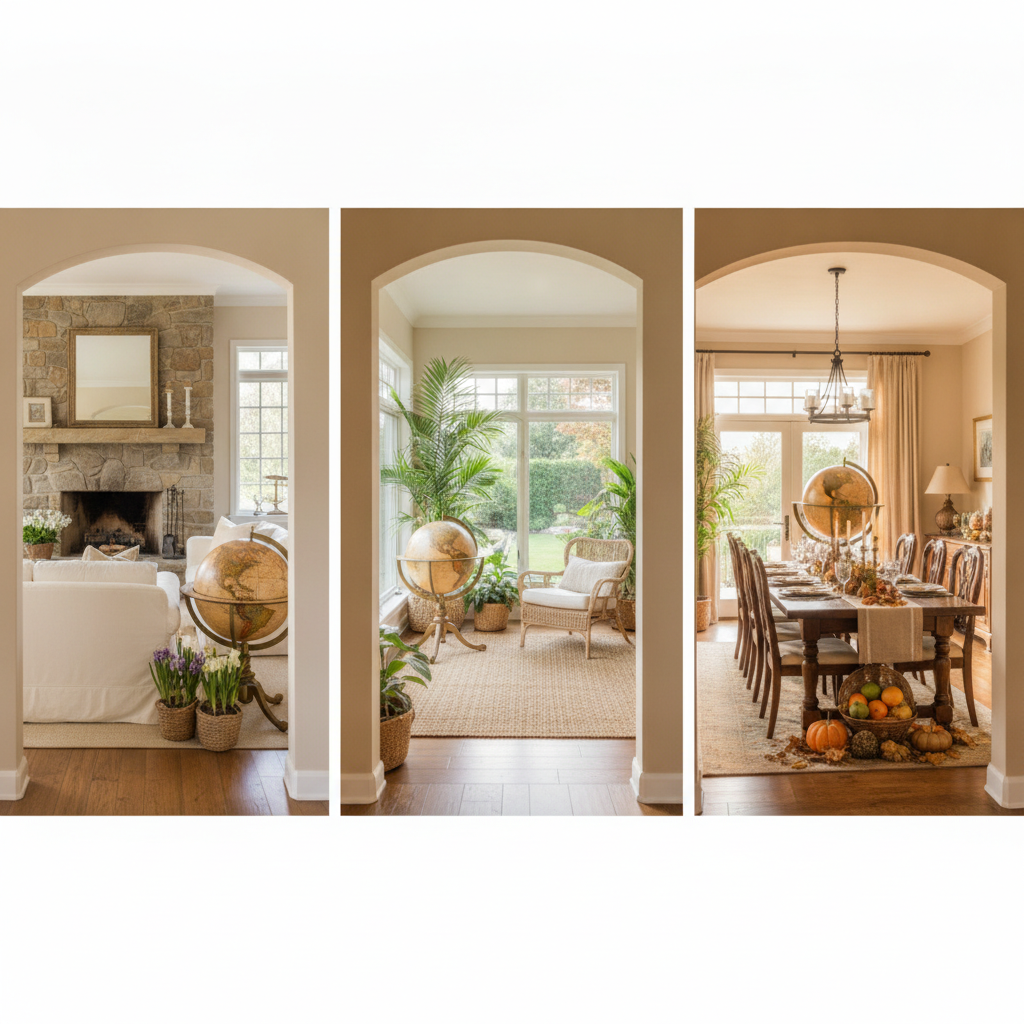
Most homes already hold everything they need to feel fresh, interesting, and seasonally alive — the pieces just stop moving. A ceramic vase sits on the same shelf for three years. A woven throw drapes the same armchair until it becomes invisible. A sculptural lamp occupies one corner so permanently it might as well be load-bearing. The simple act of choosing one meaningful object and rotating it through each room across the four seasons can transform how a home feels without a single new purchase, delivery box, or store visit.
Choose One Object That Has Presence in Any Room
Look for Something With Weight, Texture, or Visual Clarity
The right object for this practice is already somewhere in your home. You're looking for something with enough presence to anchor a surface — a glazed pottery bowl, a brass candleholder, a sculptural bookend, a framed print, or a trailing plant in an interesting container. It doesn't need to be large, but it should be noticeable. When you carry it from one room to the next, it should ask to be seen. Think of it less as décor and more as a quiet focal point that shifts the energy of wherever it lands.
Avoid Objects That Are Too Specific to One Space
Bathroom organizers and kitchen utensil holders don't travel well — they carry too much functional association with a single room to read as anything other than out of place. The best statement objects are those that exist somewhere between functional and purely decorative. A shallow bowl works in an entryway, a bedroom dresser, a living room coffee table, and a bathroom counter. Flexibility is the quality you're selecting for. When in doubt, go with something handmade, textured, or with an interesting silhouette.
Map Out a Simple Seasonal Rotation Plan
Assign One Room to Each Season
The most practical approach is to give each season a destination room. Winter, when people spend the most time indoors and gravitating toward comfort, is a natural fit for the living room — the place where the object will be most noticed and appreciated. Spring works well in an entryway or hallway, where it greets everyone coming and going. Summer suits a bedroom or reading nook, where slower mornings invite more attention to the surroundings. Autumn, with its instinct for warmth and texture, fits naturally in a kitchen or dining area.
Build the Rotation Into an Existing Seasonal Rhythm
If you already follow a seasonal declutter rhythm or a home maintenance calendar — both practices that tend to cluster around equinoxes and solstices — simply attach the object rotation to that same moment. Apps like Todoist or Notion make it easy to set a recurring reminder four times a year. You don't need a formal system; a simple note in your phone's calendar is enough. What matters is that the rotation becomes a small, anticipated ritual rather than something you remember to do by accident.
Notice How the Same Object Reads Differently in Each Space
Lighting Changes Everything About How an Object Appears
One of the more surprising things about this practice is how different a single object can look depending on where it sits. Natural light from a south-facing window makes glazed ceramics glow in a way that a north-facing bedroom simply won't replicate. Warm lamplight in a living room reading corner gives a brass or copper object a richness it won't show under bathroom vanity lighting. The object hasn't changed — but your experience of it does, which is exactly what makes the room feel refreshed.
Surrounding Objects Create New Conversations
When a sculptural bowl that usually lives on a coffee table suddenly sits on a bedroom dresser beside a stack of books and a small succulent, it reads completely differently. The neighbors matter. Part of what makes this practice work is that the rotating object interrupts the visual routine of each room — and in doing so, it makes you look at everything around it with slightly fresh eyes. Pinterest and Instagram are useful for getting a sense of how others style similar objects across different contexts, which can spark ideas you'd never arrive at alone.
Let the Practice Reveal What Your Home Actually Needs
A Rotating Object Becomes a Diagnostic Tool
Over a full year of rotating one object, you'll likely discover which rooms in your home feel consistently flat, underlit, or visually thin. The bedroom that looks beautiful with the brass candleholder but empty without it is telling you something. The entryway that comes alive with the ceramic bowl is pointing toward a longer-term opportunity. You're not just refreshing your home seasonally — you're auditing it gently and accumulating real information about what each room responds to. That knowledge is worth more than any shopping cart impulse.
Use What You Learn Before You Consider Buying Anything New
Platforms like Freecycle and Buy Nothing groups exist precisely for moments when a home genuinely needs something new — and what you've learned through a full rotation cycle makes you a far more precise shopper when that moment comes. Rather than buying a new piece because a room feels vague and you can't articulate why, you'll know exactly what quality — height, material, warmth — a space is asking for. Thoughtful observation almost always produces better outcomes than reactive purchasing.
Make It a Moment Worth Savoring
Moving a single object from one room to another takes less than five minutes, but treating it as a small seasonal ceremony changes the experience entirely. Take a moment to dust the object before repositioning it, rearrange whatever surrounds its new home, and step back to look. Give it a week before deciding whether the placement works. There's something genuinely satisfying about refreshing a room without spending a cent — and once you've done it once, the urge to do it again next season arrives naturally. Start by choosing one object today, and decide where it will spend the next three months.