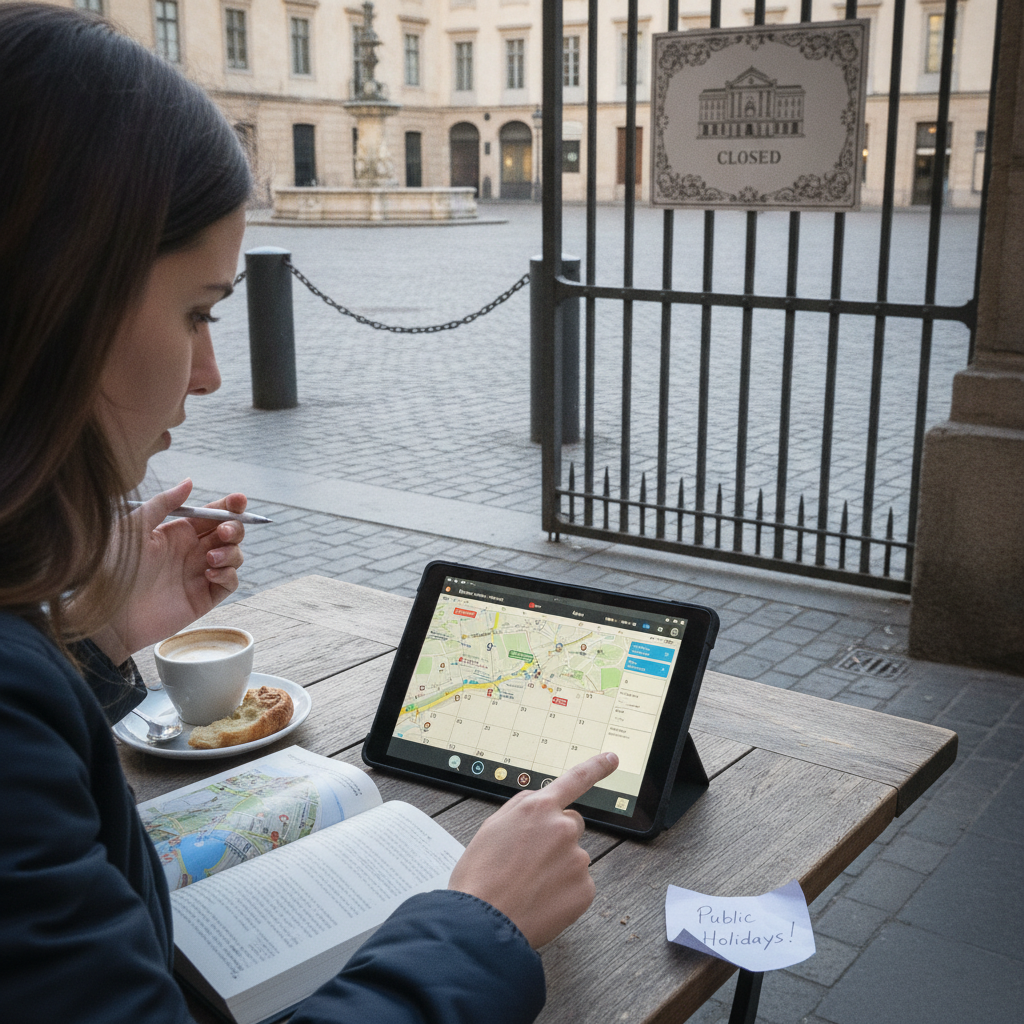
Public holidays have a way of reshaping a destination entirely — and most travelers don't find that out until they're standing in front of a locked museum or paying three times the normal rate for a hotel room. Knowing a country's official holiday calendar before you book isn't just a nice extra step. It's one of the most practical research habits a traveler can build, and it costs nothing but a few minutes of attention.
When Local Closures Catch You Off Guard
Many countries observe public holidays that aren't widely known outside their borders. Portugal celebrates its National Day in June, Japan's Golden Week clusters multiple holidays into a single dense stretch in late April and early May, and Thailand's Songkran festival shuts down or transforms entire cities for days at a time. If you've booked a packed itinerary during any of these periods without realizing it, you may find that the sites you planned to visit are closed, the restaurants you hoped to try are shuttered, and the transport links you relied on are operating on reduced schedules.
Understanding the Difference Between a Holiday and a Festival
Not every public holiday means closures — some signal the opposite. A national festival can mean streets filled with processions, markets running late into the night, and cultural performances that no amount of planning could otherwise secure. The key is understanding what kind of holiday you're looking at. Government-observed closures tend to affect banks, post offices, museums, and official attractions. Cultural or religious celebrations often mean added energy and activity in public spaces, but also elevated prices, larger crowds, and fully booked accommodation. Researching what type of holiday a date represents tells you whether to avoid it or lean into it.
How Holiday Timing Drives Accommodation Pricing
Hotel and rental pricing responds to demand, and public holidays generate predictable demand spikes. Booking a stay in Barcelona during a local holiday — say, La Mercè in September — without realizing it is one of the fastest ways to accidentally overspend on lodging. Platforms like Airbnb and Booking.com don't always flag local holidays in their pricing displays, so the rate jump can look invisible until you compare it to surrounding dates. Checking a destination's holiday calendar first lets you make an informed choice: book early to lock in reasonable rates, shift your dates by a few days, or budget appropriately for the premium.
Finding Reliable Holiday Calendars Before You Book
Government tourism boards publish official public holiday lists for most countries, and these are typically the most accurate source. Time and Date is a widely used site that maintains comprehensive country-level holiday data, updated regularly. For region-specific travel — say, a trip focused on a particular Italian province or a specific Japanese prefecture — local government websites often list regional observances that national calendars don't capture. Spending twenty minutes with these sources before you book can prevent far more expensive corrections later.
Building Holiday Awareness Into Your Itinerary Structure
Once you know which holidays fall within your travel window, it's worth building your itinerary around them rather than ignoring them. If a major site will be closed on a particular day, that's a natural day for outdoor exploration, a day trip, or slower neighborhood walking — activities that don't depend on institutional schedules. If a holiday means a significant local celebration, positioning yourself near the center of the festivities might become one of the highlights of the trip. A little structural flexibility, planned in advance, turns potential disruptions into deliberate choices.
Watching for Holiday-Adjacent Price Windows
The day before and the day after a major public holiday often carry their own pricing and crowd dynamics. The day before a long weekend holiday can mean packed transit and elevated accommodation; the day after can mean eerily quiet streets and discounted last-minute availability. Knowing which days immediately surrounding a holiday tend to behave unusually gives you more precise control over your budget. This kind of awareness is especially useful in cities like Rome or Lisbon, where visitor volume shifts dramatically around national observances.
Adjusting Your Transport Plans Around Holiday Schedules
Public transport in many countries runs on reduced or modified schedules during national holidays, and this catches travelers off guard more often than almost any other variable. Train routes that run hourly on a normal weekday might drop to two or three services on a holiday. Bus connections between smaller towns can disappear entirely. If your itinerary depends on moving between cities on a specific day, checking whether that day falls on or near a public holiday — and what the transport authority's holiday schedule looks like — is an essential pre-booking step, not an afterthought.
Researching a destination's public holiday calendar before booking is one of those quiet, unglamorous habits that consistently produces better trips. It shapes where you stay, how you move, what you can access, and what you'll pay — and it does all of that before you've spent a single dollar on the trip itself. The travelers who do this step aren't being overly cautious; they're simply working with more complete information, and the difference shows up in every part of the experience.