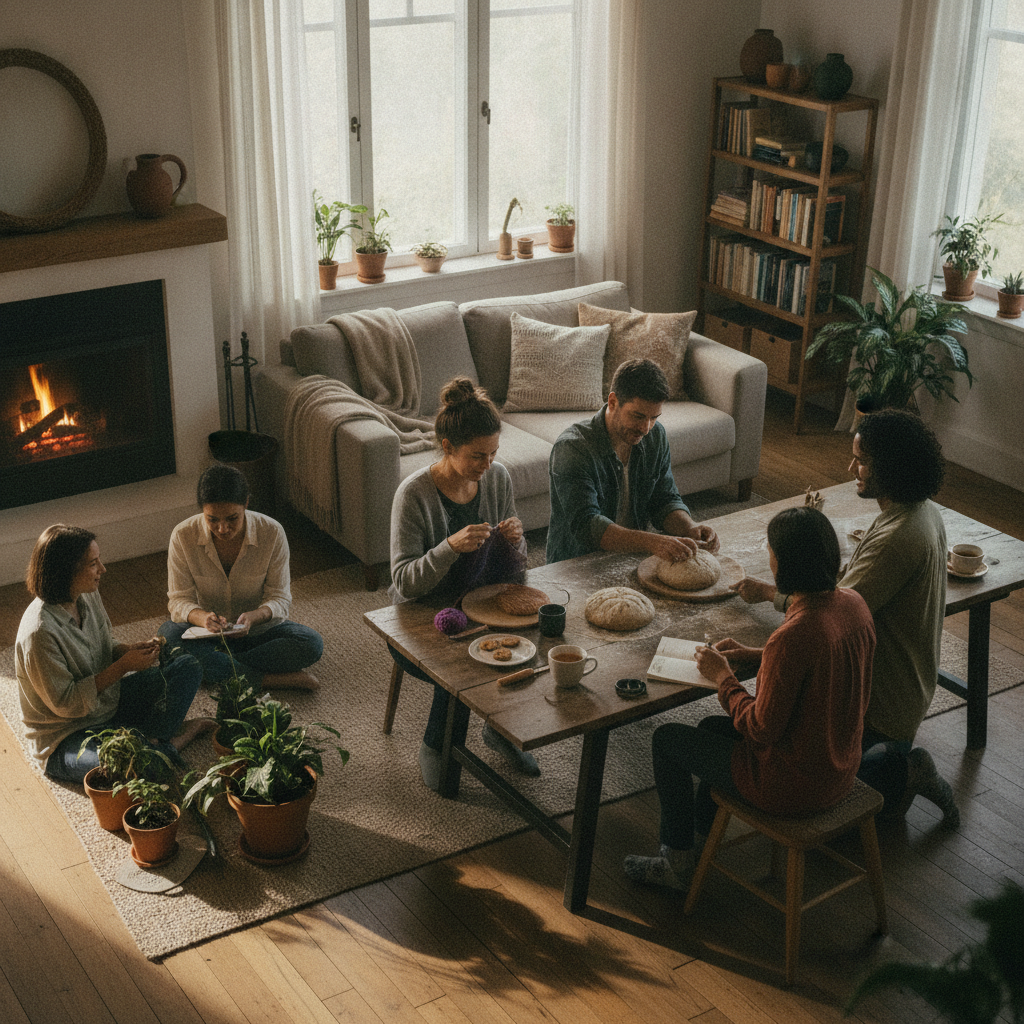
There is something quietly revolutionary about a group of adults sitting around a kitchen table, one of them demonstrating how to sharpen a knife properly while the others lean in with genuine attention. No tuition fee was paid. No online platform was subscribed to. No instructor drove forty minutes across town. The knowledge simply moved between people who already trusted one another, and something more than a skill was transferred — a sense of mutual usefulness that modern life rarely offers so cleanly. This is the quiet power behind the skill-swap evening, a practice growing steadily in neighborhoods from Portland's Sellwood district to East London's creative communities, and it deserves more credit than it typically receives.
The Economics of Learning From Each Other
Professional development classes, recreational workshops, and hobbyist courses have become surprisingly expensive leisure commitments. A single pottery session at a well-regarded studio, a weekend breadmaking workshop, or a two-hour calligraphy class can each carry a price that, accumulated over a year, rivals a modest vacation budget. What the skill-swap model recognizes is that most social circles already contain a remarkable breadth of competency — someone knows how to hem trousers, someone else ferments their own kombucha, another person can explain compound interest in ten minutes more clearly than any personal finance app. The quarterly format matters here. Meeting four times a year keeps the commitment sustainable without letting the habit dissolve, and it creates a natural rhythm that feels like a seasonal event rather than an obligation. Each gathering becomes something people look forward to rather than schedule around.
What Skill-Swapping Actually Looks Like in Practice
The mechanics are straightforward without being rigid. A group of six to ten people — the ideal size for focused attention without chaos — agrees to rotate the teaching role each quarter. One person prepares a short demonstration or workshop, rarely longer than ninety minutes, on something they genuinely know well. This might be basic sourdough technique, the fundamentals of watercolor layering, how to read a lease agreement, or the principles behind a capsule wardrobe. The host provides the space; participants sometimes bring supplies, sometimes not. What distinguishes these evenings from informal hangouts is the intentionality. There's a structure, however loose, that signals: tonight, we are here to learn from one another. That shared purpose shifts the social dynamic in subtle but meaningful ways, elevating the evening beyond dinner conversation into something more nourishing.
The Social Architecture of Shared Knowledge
Anthropologists use the term *reciprocal exchange* to describe systems where goods, labor, or knowledge move through a community without direct monetary transaction — building social bonds as a byproduct. The skill-swap evening is a contemporary expression of this ancient pattern. When someone teaches, they are not simply transferring information; they are offering a piece of their identity, their hard-won competence, and that act creates a particular kind of intimacy. The learners, in turn, become witnesses to someone else's depth, which quietly reframes how they see that person outside the gathering. Relationships that might otherwise remain pleasantly surface-level develop a different texture. Over several quarters, the group accumulates a shared history of these exchanges, and that history becomes its own form of community infrastructure — less visible than a neighborhood association but arguably more felt.
Replacing the Class Without Replacing the Learning
The concern some people raise about informal teaching is quality — that a friend demonstrating fermentation cannot replace a certified instructor. This concern is reasonable but often overstated. For most recreational and practical skills, the goal is not mastery on a professional timeline but functional competence and genuine engagement. A friend who bakes excellent bread every week has logged real experience, and teaching from that place is often more accessible than formal instruction precisely because it's unpolished and honest about its own limits. Apps like Skillshare and platforms like Coursera remain valuable for structured, self-paced learning, but they cannot replicate the social accountability and warmth of a room where someone who knows you is patiently showing you how to hold a crochet hook. Both have their place; the skill-swap evening simply reclaims the human dimension that digital learning understandably lacks.
Building the Habit That Sustains Itself
For the practice to endure, the group needs a few quiet agreements. Rotating the teacher role prevents anyone from feeling like the permanent expert or the permanent novice. Keeping the skill accessible — choosing topics that don't require expensive materials or advanced prerequisites — ensures that participation stays equitable. A shared calendar reminder, a group chat thread, and a simple rotating host schedule are all the infrastructure required. Cities with strong maker cultures, like Austin or Minneapolis, have seen informal versions of this practice grow into small community institutions over time, which suggests that the format scales when people protect its simplicity. The quarterly rhythm also allows each gathering to feel like an event, something marked and anticipated, which is precisely the kind of positive social gravity that keeps communities cohesive.
There is a completeness to ending a skill-swap evening the same way it began — with people gathered around a table, now slightly more capable than they were two hours before, the room warm with the particular satisfaction of having learned something from someone who simply wanted to share it. The kitchen table and the leaning-in curiosity remain, but now they carry a history: the quarter when someone finally understood compound interest, the evening the bread came out right, the session where three people discovered they all wanted to learn the same thing. That accumulation is not incidental to the practice — it is the practice, quietly building the kind of community that no class, however excellent, has ever quite been able to sell.