Travelers lose real money at airport exchange kiosks every single day — not because they're careless, but because nobody told them there's a better way to think about foreign currency. The airport booth is the most visible option at the worst possible moment, and it's designed to profit from urgency. A smarter approach starts weeks before departure, when you have time to understand how people actually pay for things where you're going and set yourself up accordingly.
Research How Locals Actually Pay
Before you book a single activity, spend thirty minutes looking into the everyday payment culture at your destination. In Japan, cash is still king at small restaurants, vending machines, and rural temples — carrying yen matters. In Sweden or the Netherlands, card-only businesses are common, and many vendors look confused when you hand them cash. Knowing this upfront tells you whether to prioritize getting local currency or simply ensuring your card works without fees. That one piece of research shapes everything that follows.
Choose a Card With No Foreign Transaction Fees
Foreign transaction fees are quiet budget killers. Many standard bank and credit cards tack on a percentage to every international purchase, and it adds up steadily over a week of meals, transit, and museums. Cards like the Charles Schwab debit account or Wise travel card are built specifically to sidestep these fees and often offer competitive exchange rates. Apply well before your trip — not the week before departure — so the card arrives, you can activate it, and you're not scrambling. This single step often outperforms any effort spent hunting for a good exchange rate.
Understand the ATM Landscape at Your Destination
ATMs abroad aren't all equal. In countries like Thailand or Mexico, local bank ATMs often charge flat fees per withdrawal, which means taking out larger amounts less frequently is smarter than small daily pulls. In countries like Portugal or Germany, ATMs tied to major national banks typically offer fair rates with minimal fees. Research which ATM networks are reputable at your destination and identify a bank branch location near where you're staying. Knowing where to go — rather than defaulting to airport or hotel ATMs — can meaningfully cut your cash conversion costs.
Time Your Currency Exchange Before You Fly
If you know you'll need local currency — whether for rural markets, tipping culture, or cash-preferred vendors — order it before you travel. Many banks allow you to order foreign currency for branch pickup, sometimes with better rates than you'd find on arrival. Services like Travelex, while not perfect, are still more competitive than the average airport kiosk when used online in advance. The key is removing urgency from the equation. When you arrive exhausted and need twenty euros for a taxi, you're in a terrible negotiating position. When you already have what you need, you're not.
Plan Your Spending Mix by Category
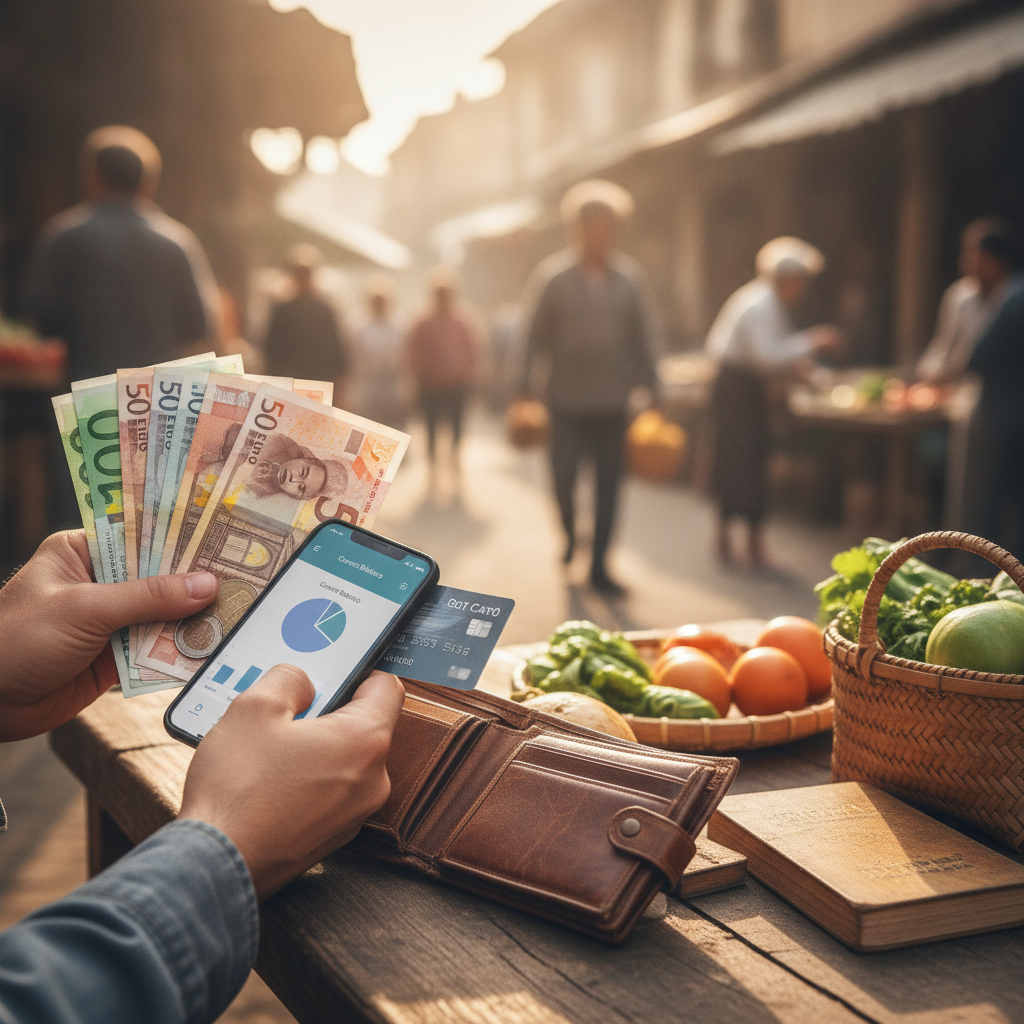
Not every purchase at your destination will work the same way. Think through your spending by category before you go: transit, accommodation, food, experiences, and shopping each have their own norms. In many Latin American cities, large hotels and chain restaurants accept cards easily, while street food vendors and local buses are cash-only. Mapping out where card versus cash applies lets you estimate how much local currency to carry without over-converting. Over-converting means you'll either spend frivolously or lose money converting back — neither outcome is worth it.
Use Wise or Revolut for Mid-Trip Flexibility
Apps like Wise and Revolut give you a level of currency flexibility that traditional banks simply don't offer. You can hold multiple currencies, convert at mid-market rates, and top up from your home account when needed. For longer trips or multi-country travel, this kind of tool lets you shift funds between currencies based on what you're actually spending — not what you predicted before departure. Setting up one of these accounts takes less than an hour and costs nothing to open. Having it available as a backup, even if you don't use it constantly, gives you options at moments when options matter.
Factor In the Hidden Cost of Convenience
Convenience has a price abroad, and it shows up in payment choices. Hotel currency exchange desks, airport ATMs, and tourist-area exchange booths all charge more because they can — you're captive, you're tired, and you just want the problem solved. Building your currency plan at home means you arrive with the hard parts already handled. The goal isn't to obsess over every transaction but to handle the structural decisions once and let the trip itself be easy. A little friction before departure consistently eliminates a lot of unnecessary spending on the road.
Check Your Bank's International Partnerships
Many banks have international ATM alliances that let you withdraw cash abroad with reduced or waived fees. Bank of America, for example, participates in the Global ATM Alliance, which covers partner banks in dozens of countries. Checking whether your home bank has these partnerships before you travel costs nothing and could save you real money over a week-long trip. Log into your bank's website, look up their international ATM partners, and note the relevant locations at your destination. It takes ten minutes and it's one of the most overlooked free advantages travelers have access to.
As digital payment infrastructure continues to expand globally, the gap between cash-centric and card-dominant destinations is narrowing — but it hasn't disappeared yet, and local habits still vary widely. The travelers who get the most value from their currency strategy are the ones who treat it as destination research rather than a last-minute errand. Payment norms are part of the culture you're entering, and understanding them before arrival is just smart preparation. The tools available right now make it genuinely easy to arrive financially ready — which means you can focus on the trip itself rather than fumbling at the ATM.