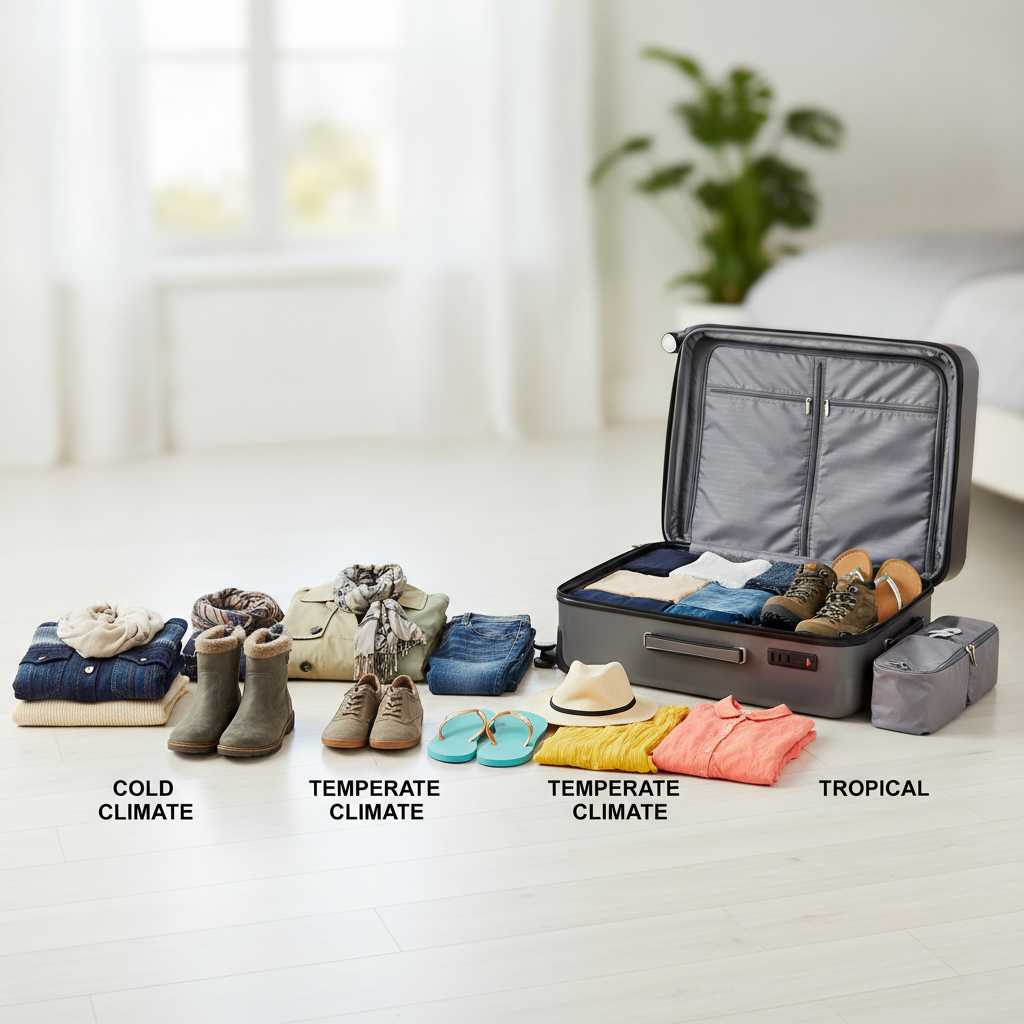
Overpacking is one of those travel habits that feels like preparation but functions more like punishment. You haul a heavy bag through airports, pay checked luggage fees you didn't budget for, and spend the whole trip shuffling through clothes you never touch. The good news is that there's a smarter way to approach this — one that works regardless of where you're going or how long you're staying.
A climate-zone packing formula is exactly what it sounds like: a pre-defined system that tells you what to pack based on the weather conditions of your destination, not the anxiety of the moment. Once you build it, you stop reinventing the wheel every time you book a trip.
Understand the Four Core Climate Zones First
Before you can build a formula, you need a clear framework. Most destinations fall into one of four practical climate zones: tropical, arid, temperate, and cold. Tropical destinations — think Southeast Asia or the Caribbean — call for lightweight, breathable fabrics and rain protection. Arid zones like the American Southwest or North Africa demand sun coverage and temperature-swing layers. Temperate climates are the trickiest because they shift, so versatility matters. Cold climates require thermal layering, and that's where most people dramatically overpack by bringing too many bulky items instead of thinking in systems.
Build a Base Layer List That Works Across All Zones
Every strong packing formula starts with a base list that doesn't change trip to trip. This includes your toiletry kit, a universal adapter, your everyday shoes, a day bag, and a fixed number of undergarments based on trip length. The rule most experienced travelers use is roughly one set per two days, with a cap. If you're traveling for ten days, you're not packing ten pairs of everything — you're packing five and doing a quick laundry refresh at the midpoint. Apps like PackPoint can help you think through the logic before you ever open a suitcase.
Assign a Capsule Wardrobe to Each Climate Zone
This is the real engine of the system. For each of your four climate zones, you pre-define a specific wardrobe capsule — a set number of tops, bottoms, layering pieces, and footwear that works cohesively together. Your tropical capsule might be four lightweight tops, two pairs of shorts, a swimsuit, one pair of sandals, and a packable rain jacket. Your cold capsule might be three merino wool base layers, two mid-layers, one insulated outer shell, and waterproof boots. Once these capsules exist as a written list, packing for any trip becomes a matter of pulling the right one out and filling in your base items.
Use a Fabric-First Approach to Cut Weight Dramatically
Fabric choice quietly determines how much your bag weighs more than item count does. Merino wool from brands like Icebreaker resists odor and regulates temperature across a wide range, meaning one shirt covers more days without feeling worn. Synthetic travel fabrics dry fast and pack small. Cotton, by contrast, absorbs moisture, takes forever to dry, and packs bulky — it's the enemy of light travel. When you rebuild your travel wardrobe around performance fabrics, the weight reduction across a full bag can be significant, especially for longer trips.
Set Hard Limits With a Per-Day Ratio
One of the most effective constraints in any packing formula is a hard per-day clothing ratio. A common benchmark is one outfit per two days for tops, with slightly more flexibility for bottoms since pants and skirts can stretch further between wears. If your trip is seven days, that points you toward three to four tops and two to three bottoms as a ceiling, not a floor. Giving yourself a ceiling rather than a floor forces better decision-making before you zip the bag, and it keeps you honest about what you actually need versus what feels reassuring to have.
Create a Printed or Saved Reference Card for Each Zone
The formula only eliminates overpacking if you actually use it. Saving each climate capsule as a simple reference card — whether in Google Keep, Apple Notes, or even a printed sheet tucked into your luggage — means you don't have to rebuild the logic from scratch every time. Your tropical card says exactly what goes in. Your cold card does the same. You update these lists after trips when you notice something was unnecessary or missing. Over time, the cards get sharper and your packing gets faster.
Leave a Buffer Column for Destination-Specific Additions
A good formula isn't rigid — it has a slot for intentional exceptions. Every climate capsule should include a small buffer column: one or two items specific to the destination's culture, activity type, or dress expectations. Visiting temples in Kyoto? Add a lightweight scarf for coverage. Heading to a business conference in Amsterdam? Add one dressy layer. The buffer column keeps your system flexible without opening the door to packing everything just in case. The key is treating it as a column with a strict limit — two items maximum.
Do a 24-Hour Pre-Trip Audit Before Every Departure
Even with a solid formula, a final audit 24 hours before you leave catches last-minute additions that don't belong. Lay everything out flat and run through each item with a simple question: does this serve a specific, confirmed need on this trip? Anything that gets a vague answer — "I might want it," "just in case" — gets left behind. TripIt and similar itinerary tools are useful here because they force you to look at your actual schedule day by day, which makes it much easier to assess what you genuinely need versus what you packed out of habit.
The longer you travel with a formula, the more automatic the whole process becomes. Your bags get lighter, your transitions through airports get smoother, and the mental load of preparing for a trip drops considerably. Start by drafting one climate capsule — whichever zone you travel to most — and build from there. The rest of the system follows naturally once that first piece is in place.