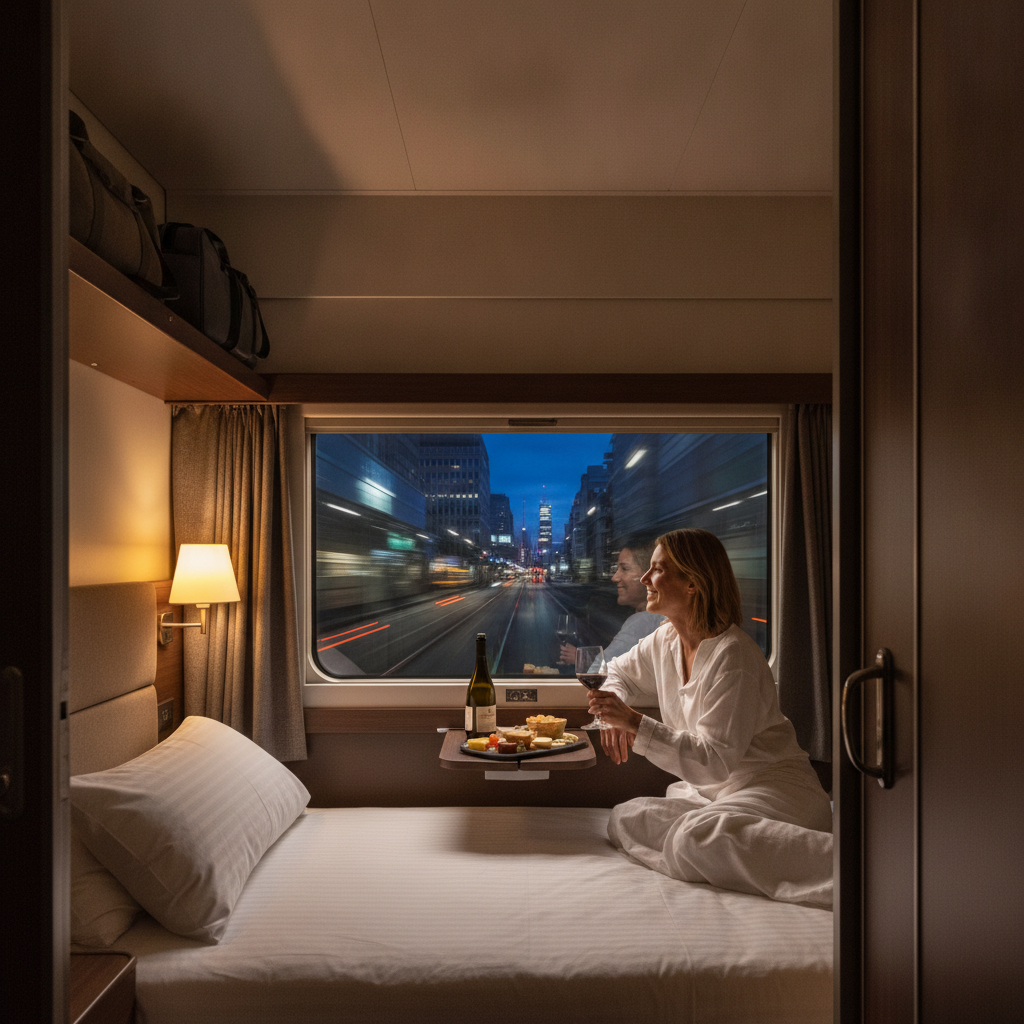
Smart travelers have long known that the journey itself can be part of the destination — and nowhere is that philosophy more practically rewarding than aboard a sleeper train. When someone boards an overnight service from Paris to Barcelona, Vienna to Zurich, or Tokyo to Osaka, they're not simply moving between cities. They're reclaiming hours that would otherwise disappear into airport queues, hotel check-ins, and restless nights in unfamiliar rooms. The overnight train is one of travel's most underappreciated tools: a way to stretch a budget, cover serious ground, and wake up somewhere new without sacrificing sleep.
Why the Math Works So Strongly in Your Favor
The financial logic behind overnight trains is straightforward. A sleeper berth — even a private couchette — typically costs a fraction of what a city-center hotel room runs in major European or Asian capitals. When you factor in that the ticket replaces both a night's accommodation and a separate transport cost, the savings compound quickly. A traveler booking a private cabin on Austria's Nightjet service between Vienna and Rome, for instance, is often spending less combined than they would on a budget hotel plus a daytime rail ticket. The money freed up can go toward experiences at the destination rather than logistics.
Choosing the Right Class for Your Comfort Level
Overnight trains typically offer several tiers of accommodation, and selecting the right one makes a real difference in how rested you arrive. At the most affordable end, open couchettes seat compartments of four to six passengers with fold-down berths — perfectly functional for budget-minded travelers comfortable with a bit of company. Mid-range private couchettes offer a door and genuine privacy, while premium sleeper cabins on services like Nightjet or the Caledonian Sleeper in Scotland include bedding, sometimes a small sink, and a quieter environment. Matching your choice to your budget and sleep preferences prevents the most common complaint: arriving exhausted rather than refreshed.
Booking Windows and the Sweet Spot for Pricing
Overnight train pricing follows patterns similar to aviation — early booking tends to yield the best fares, and popular routes fill up fast. European sleeper services through operators like Rail Europe often release inventory several months in advance, and the lowest-priced berths disappear first. That said, last-minute deals surface occasionally on routes with lower demand, particularly midweek departures. Booking via national rail apps — SNCF Connect for French routes, DB Navigator for German services — sometimes surfaces promotional fares that aggregator sites miss. The general rule is to treat overnight trains like flights when it comes to planning ahead.
How to Actually Sleep Well on a Moving Train
Arriving rested depends on more than just booking a berth. A few practical habits make a significant difference. Bringing a quality eye mask and earplugs addresses the two most disruptive elements: ambient light from station stops and the intermittent sounds of a train in motion. Choosing a berth in the middle tier of a couchette compartment tends to offer more stability than the top, which can feel more turbulent on faster rail lines. Avoiding alcohol before boarding — despite it feeling like a social option in the dining car — leads to genuinely better sleep quality. Light, familiar snacks before bed also help rather than a heavy dinner that can cause restlessness.
Making the Dining Car and Common Spaces Work for You
One of the underrated pleasures of overnight train travel is the social architecture built into the journey. Most long-distance sleeper services include a dining or bistro car that becomes a genuinely convivial space in the evening hours before passengers retire. Sharing a table on the Thello service or the old Inter-Rail routes introduces a kind of slow travel connection that airports simply cannot replicate. Even those who prefer solitude find that spending an hour watching the countryside pass with a coffee and a book — before the lights outside disappear into darkness — sets a particular mood that marks the trip as memorable rather than merely functional.
Packing Smart for an Overnight Journey
The overnight train rewards a slightly different packing strategy than a standard day trip. Keeping a small personal bag separate from checked or stored luggage means essentials — toiletries, a change of clothes for morning, phone charger, and sleep aids — are accessible without rummaging through an overhead rack in the dark. Many sleeper services provide basic toiletries and a breakfast option, so over-packing personal care items adds unnecessary weight. Arriving in a fresh shirt after a sleeper journey, ready to check into a destination without first finding accommodation, is one of those small but meaningful travel wins that experienced overnight train riders have long relied on.
Destinations Where Overnight Trains Still Make Strong Sense
While some routes have contracted in recent decades, the European sleeper network has seen genuine revival. Nightjet now connects cities across Austria, Germany, Switzerland, Italy, and the Netherlands with an expanding route map. The Caledonian Sleeper remains one of Britain's most atmospheric travel options, linking London with Scottish Highlands destinations like Inverness and Fort William. In Asia, Japan Rail's overnight services and the extensive network across Vietnam — particularly the popular Hanoi to Da Nang corridor — offer affordable, practical connections. Travelers willing to research slightly off-the-radar routes often find the most rewarding combinations of value, scenery, and cultural texture.
What to Watch for as Sleeper Networks Continue Expanding
Europe's overnight rail renaissance shows no sign of slowing. Several national operators have announced new routes and upgraded rolling stock for the coming years, with cross-border services becoming more seamlessly integrated. Environmental considerations are drawing a new generation of travelers toward rail — the carbon footprint of a sleeper train compared to a short-haul flight is dramatically lower — and that awareness is reshaping how people plan multi-city trips across the continent. For travelers willing to rethink what transit can be, overnight trains represent not just a smarter budget choice but a fundamentally more satisfying way to move through the world. The destination begins the moment you board.