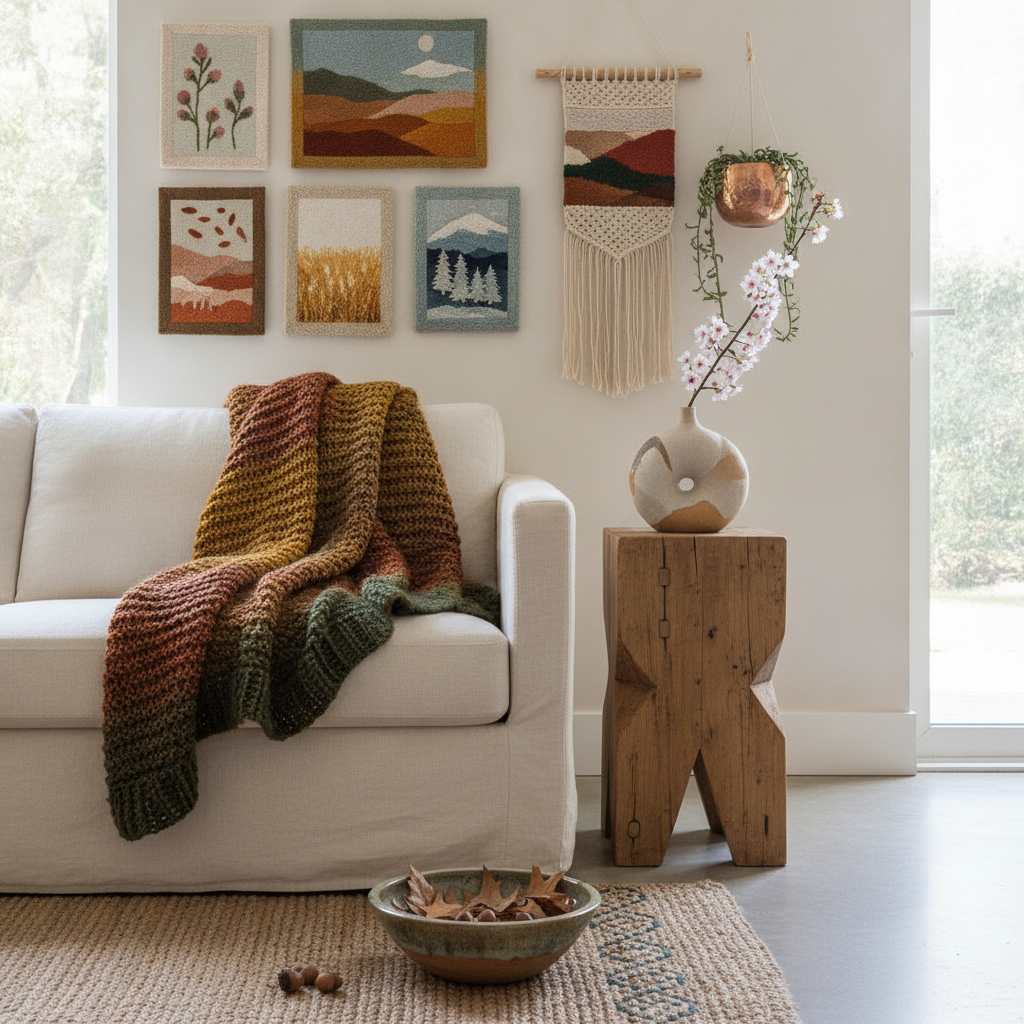
There is something quietly unsettling about a home that looks exactly like every other home on the block — identical throw pillows, the same ceramic vases from the same big-box retailer, furniture that arrived flat-packed and anonymous. Most people have experienced that faint, hard-to-name dissatisfaction when a room is perfectly styled but somehow doesn't feel like theirs. The solution rarely requires a full renovation or an expensive decorator. More often, it begins with something small, seasonal, and made by hand.
Why Mass-Produced Décor Leaves Homes Feeling Hollow
Mass production is extraordinary at delivering consistency, affordability, and convenience — and none of those qualities are inherently bad. The problem emerges when every object in a home carries the same anonymous quality, the same finish, the same story of a factory floor somewhere distant. A home furnished entirely this way can feel assembled rather than inhabited. Handmade objects carry a different kind of weight: the slight irregularity of a thrown clay bowl, the uneven texture of a hand-woven basket, the smell of beeswax on a carved wooden tray. These details register even when you can't articulate why, and over time they accumulate into something that feels irreplaceable.
The Seasonal Rhythm That Makes It Sustainable
Introducing handmade elements into a home doesn't have to mean an expensive overhaul or a sudden commitment to artisan shopping. The more practical — and ultimately more rewarding — approach is seasonal: one intentional addition per quarter, timed to coincide with the natural shifts that already shape how a home feels. In autumn, perhaps a hand-thrown ceramic mug that becomes part of the morning ritual. In winter, a small woven textile draped over a reading chair. Spring might bring a locally made ceramic planter; summer, a hand-dyed linen napkin set that earns a permanent place on the table. Each addition is modest in cost but meaningful in presence, and the rhythm itself becomes part of the household's character.
Timing Your Search Around Craft Markets and Seasonal Fairs
Craft fairs tend to cluster around predictable seasonal windows — late autumn before the holidays, early spring as makers emerge from winter studios, and summer weekend markets in most mid-sized cities. Planning purchases around these events gives you access to a wider range of makers, better prices than boutique retail, and the chance to hear the story behind what you're buying. Platforms like Etsy remain a reliable year-round resource for handmade goods, particularly for buyers in areas where local maker communities are smaller. The key is to browse with a seasonal intention rather than impulse, so each piece has a designated place and purpose in the home before it arrives.
Using Apps to Discover Local Makers Before You Shop
Beyond seasonal fairs, apps and platforms have made it easier than ever to find skilled makers working close to home. Goldmark and similar regional artisan directories list makers by medium and location, while Instagram remains one of the most practical tools for discovering potters, weavers, and woodworkers before ever visiting a market. Searching a location tag plus a craft medium often surfaces local makers who sell directly from their studios, bypassing retail markups entirely. Building a loose mental list of two or three makers whose work resonates with you — one per craft category — means that when a season turns, you already know where to look.
How Each Addition Deepens the Home's Identity Over Time
A single handmade object doesn't transform a room. But four objects, introduced thoughtfully across a year, begin to tell a coherent story about the people who live there. After two or three years, a home might hold a small collection of pieces from different makers, different materials, different seasons — a ceramic dish from a summer market, a wool-wrapped candle holder from a winter fair, a hand-stitched linen runner discovered at a spring studio sale. None of these items match in the conventional sense. All of them belong, because they share a quality of being chosen with care rather than convenience, and that quality registers viscerally in any room.
What to Look for When Choosing Each Seasonal Piece
The most enduring handmade additions tend to share a few qualities regardless of medium: they serve a function (however modest), they work within the existing palette of the room without demanding attention, and they feel as though they could have been made specifically for the space even if they weren't. Prioritizing utility over pure decoration also makes the investment easier to justify — a beautiful hand-thrown vessel that holds pens or a hand-carved tray that organizes keys earns its place every day rather than collecting dust as a display object. Makers on platforms like Faire often offer functional everyday pieces alongside more decorative work, which makes finding that balance straightforward.
The Quiet Confidence a Distinctive Home Creates
A home that feels genuinely personal does something for its inhabitants that a well-styled but impersonal space cannot. It reinforces a sense of self, a set of preferences and values that exist beyond trend cycles and algorithm-driven style recommendations. Guests notice it, though they rarely say why — they just feel more comfortable, more curious, more inclined to linger. For the people who live there, the effect is subtler and more durable: a daily reminder that the space around them has been built with intention, one season at a time, rather than assembled in a single afternoon from a showroom floor.
The practice of introducing one handmade element per season is, at its core, an act of patience — a decision to let a home grow rather than be completed. It returns a home to something older and more satisfying than any interior trend can deliver: the sense that every object in a room has a small story, and that together those stories add up to something that is unmistakably, irreducibly yours. As the next season approaches, it's worth asking which corner of your home is waiting quietly for exactly that.