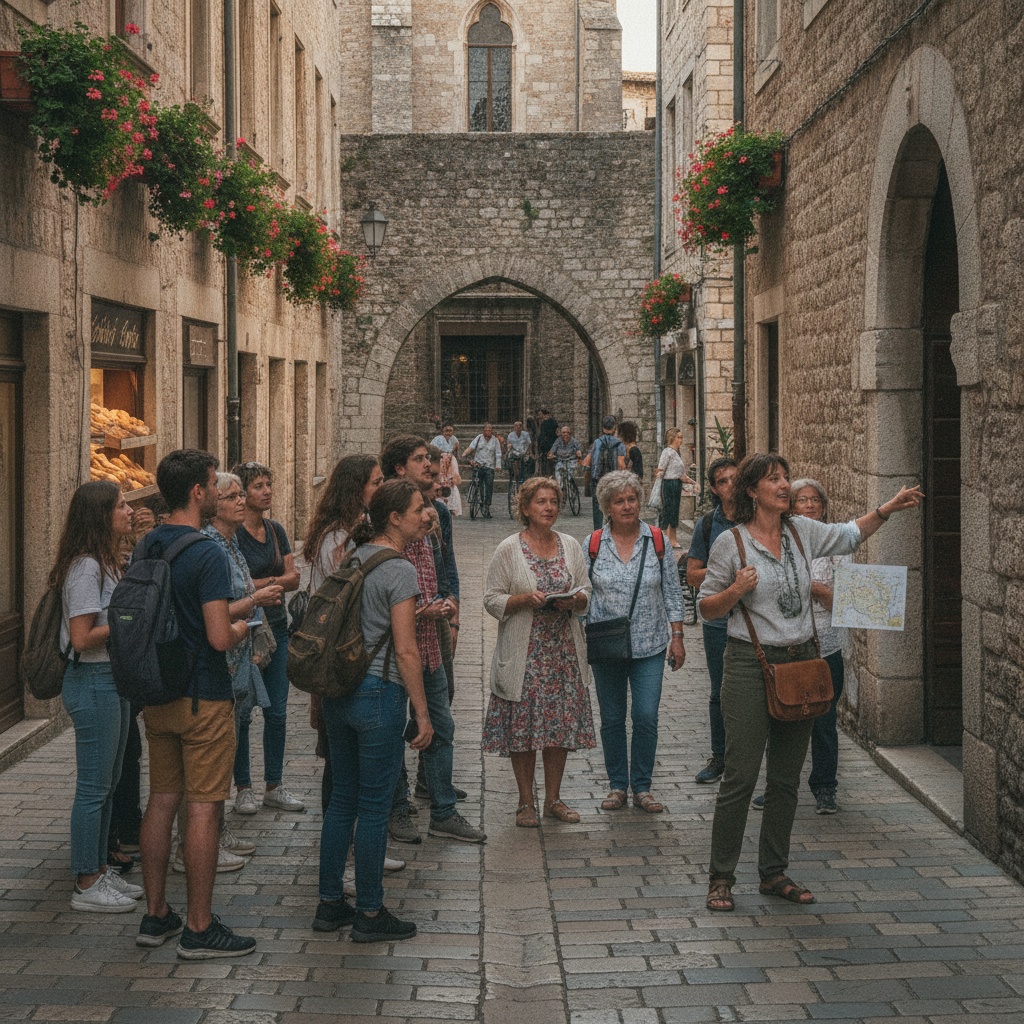
Travelers who spend the most meaningful time in a city rarely credit a famous museum or a ticketed landmark as the moment everything clicked. More often, it was a conversation with a guide on a side street, a detail pointed out in a neighborhood square, or the story behind a building they'd walked past three times without registering. Free walking tours consistently produce that kind of experience — and the travelers who benefit most from them are the ones who looked up the schedule before they ever packed a bag.
Planning around a tour that runs twice a week or only on certain mornings is a different logistical puzzle than planning around one that runs daily. Getting ahead of that reality at the research stage turns a free tour from a nice bonus into an anchor point your entire itinerary can build around.
Why Free Walking Tours Offer More Than Just Savings
Free walking tours operate on a tip-based model, which means guides are motivated to deliver genuinely memorable experiences rather than scripted recitations. In cities like Prague, Lisbon, and Buenos Aires, these tours have become deeply embedded in local tourism culture — long enough that the guides are often trained historians, urban planners, or lifelong residents with strong opinions about their city's complicated past. The depth of context you receive per hour often outpaces what a printed audio guide or a ticketed museum can offer, largely because a live guide reads the crowd, adjusts the pace, and answers follow-up questions on the spot.
Finding the Schedule Before You Book Flights
Most free walking tours are listed on platforms like Airbnb Experiences, GetYourGuide, or the tour operator's own site, but the schedule information is often buried or incomplete until you click through to a specific date. Checking this early — before finalizing your arrival date — gives you a genuine edge. If the tour you want runs Tuesday, Thursday, and Saturday mornings, arriving on a Wednesday suddenly makes more sense. It's a small logistical adjustment that costs nothing at the planning stage and pays off immediately once you're on the ground.
Using the Tour as an Orientation Layer, Not a Highlight Reel
The instinct for many first-time visitors is to treat a walking tour as a checklist of sites to photograph. A more useful frame is to treat it as an orientation layer that makes everything else on your itinerary richer. Once a guide explains why a particular neighborhood was historically avoided, or why the architecture in one district looks so different from the next, the rest of your time in that city starts making more sense. That contextual foundation is genuinely hard to build through guidebooks alone, and nearly impossible to build from inside a ticketed attraction that covers only its own subject.
Researching the Tour's Neighborhood Focus in Advance
Many cities have multiple free walking tour options, each covering a different neighborhood or historical era. In Berlin, you might choose between tours focused on Cold War history, Jewish heritage, or street art in Kreuzberg. Reviewing the available options in advance lets you sequence them strategically — perhaps booking the historical overview tour on your first full day, then returning to specific neighborhoods later in the trip with enough context to actually understand what you're seeing. Without that advance research, travelers often discover a tour they wish they'd taken on their second-to-last day, when rescheduling is no longer practical.
Pairing Tour Timing With Your Accommodation Choice
Free walking tours almost always depart from a central public square or landmark, and that meeting point can quietly influence your best accommodation area. If you're staying in a neighborhood that's a 35-minute transit ride from the departure point, you may skip the tour on a slow morning rather than commit to the logistics. Knowing where tours start before you book accommodation lets you position yourself for low-friction access. In cities like Seville or Kraków, staying within easy walking distance of the historic center tour's departure point often saves both time and transit costs across multiple mornings.
Reading Reviews to Calibrate Expectations
Not all free tours are equal in quality, and reviews on platforms like TripAdvisor or Google Maps tend to be unusually candid for this category — partly because travelers feel they have nothing to lose in being honest when no money formally changed hands. Reading a few dozen reviews before you arrive helps you gauge whether the tour leans heavily toward one era of history, whether the guide accommodates questions well, or whether the group size typically gets too large to hear clearly. That calibration shapes realistic expectations and helps you decide whether to tip generously or book a different operator.
What to Do With the Information You Collect
A good walking tour generates a list of follow-up visits, questions, and places to return to — a local wine shop the guide mentioned, a courtyard that's technically open to the public but not widely known, a viewpoint that doesn't appear in any major travel publication. Bringing a small notebook or keeping a note open on your phone during the tour lets you capture those references while they're fresh. Travelers who return to those follow-up spots often describe them as the most memorable moments of a trip, precisely because they arrived with genuine curiosity rather than a tourist's obligation.
The habit of researching free walking tours before arrival is spreading quietly among experienced independent travelers, and tour operators are responding by expanding schedules, offering multilingual options, and building more thematic variety into their routes. As more cities develop robust tip-based tour ecosystems, the pre-trip research step becomes an increasingly reliable way to orient yourself — not just to the sights of a place, but to its actual texture. Travelers who treat that research as seriously as they treat booking flights are consistently the ones who come home saying the trip felt like more than a surface skim.