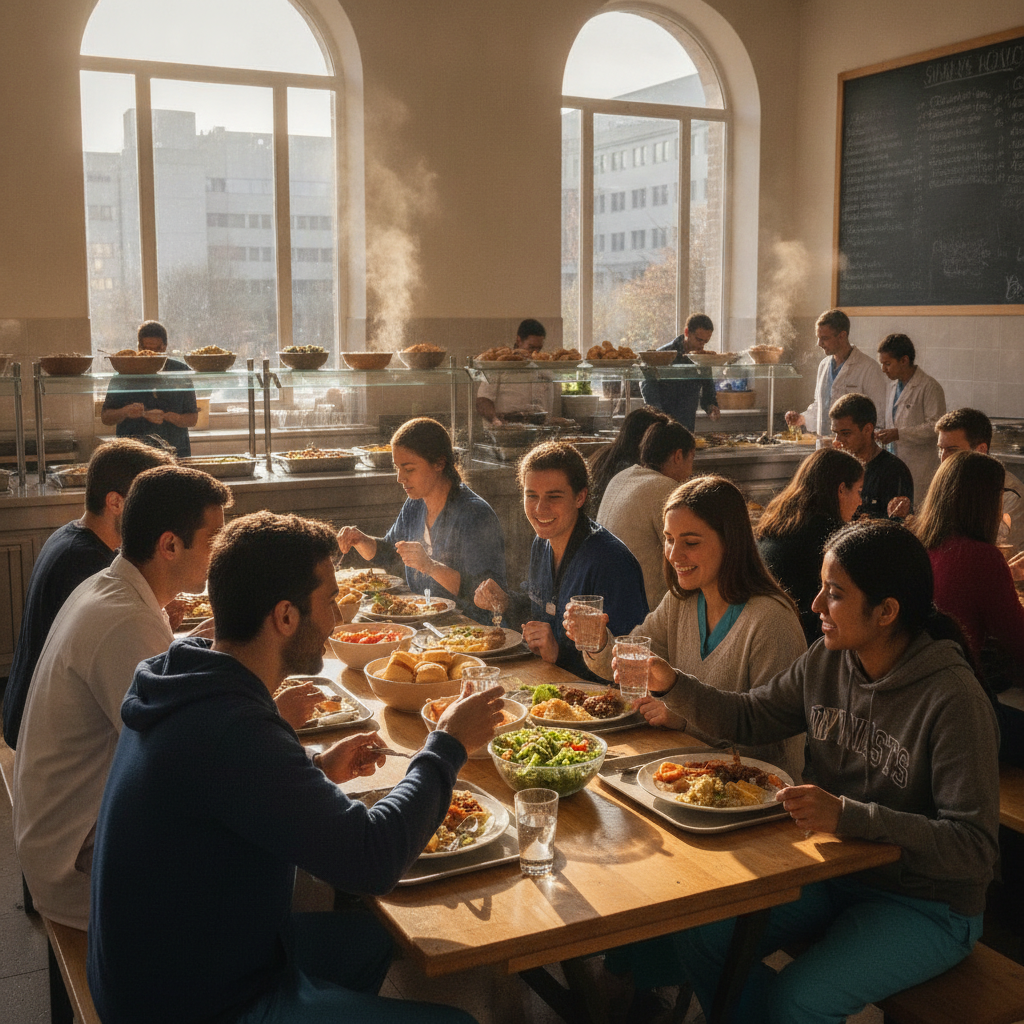
Travelers consistently overpay for food, not because cheap options don't exist, but because they don't know where to look. The restaurants that survive on repeat business from nurses, lab technicians, professors, and administrative staff have no reason to cut corners or inflate prices. These workers eat out constantly, know their neighborhood cold, and have zero patience for bad value. Following their habits is one of the most reliable food strategies you can use anywhere in the world, from Bangkok to Barcelona to Detroit.
Find the Nearest Hospital District on a Map
Before you even pack, open Google Maps and locate the major hospital campuses closest to your destination's center. Urban hospitals almost always anchor a cluster of affordable, high-turnover restaurants within a few blocks. These spots serve shift workers at all hours, which means the food has to be fast, filling, and priced for someone buying lunch five days a week. Look for streets with names like Medical Center Drive or University Avenue — they're rarely in guidebooks, but they feed thousands of locals every single day.
Use Google Maps Reviews Filtered by Time of Day
Once you've identified the hospital or university district, look at which restaurants show peak activity during weekday lunch hours, roughly 11:30 a.m. to 1:30 p.m. These are the spots that staff actually choose when they have a 30-minute break and real hunger. Reviews left during those windows tend to be from regulars, not tourists, and they'll tell you things like portion size, speed, and whether the daily special is worth ordering. Yelp's filter by reviewer count also helps you spot places with genuine community loyalty rather than a single viral moment.
Walk Two Blocks Past the Main Cafeteria
Hospital and university cafeterias are convenient, but the real action happens just outside. Workers who want something better than institutional food — without going far — tend to cluster at the same two or three spots within easy walking distance. Ask a staff member where they actually eat, not the cafeteria, and you'll almost always get a specific name with a specific recommendation. In cities like Chicago, that might be a Vietnamese sandwich shop on a side street; in New Orleans, it could be a po'boy window that's been there for forty years.
Time Your Visit for the Weekday Lunch Rush
Showing up at 12:15 p.m. on a Tuesday is the single best thing you can do to confirm a restaurant is legit. If a place near a hospital or university is packed with people in scrubs, lanyards, and backpacks, you've found exactly what you're looking for. The food has to turn over quickly, which means it's fresh. The prices have to hold steady, because these customers will walk if they go up. You're essentially outsourcing your restaurant vetting to a crowd of local professionals who eat out for a living.
Ask at University Student Union Information Desks
Student union staff at major universities field questions about campus life constantly, and they know where the affordable food actually is. A quick question — where do students eat off-campus when they want something cheap and good — almost always produces three or four honest answers. Universities in cities like Austin, Montreal, and Portland tend to have surrounding neighborhoods dense with affordable international food, driven by a student population with tight budgets and adventurous tastes. This approach works especially well if you're visiting a college town where the university is the economic center.
Look for Restaurants With Handwritten Daily Specials
Restaurants that post a handwritten or chalkboard special are almost always cooking from fresh inventory rather than a laminated menu designed to last forever. In hospital and university districts, these daily specials are often priced to compete for repeat business — same customer, every Tuesday. A laminated eight-page menu with glossy photos is a tourist-facing signal. A whiteboard that says "today's soup and half sandwich" is a locals-facing signal. Learning to read that difference quickly is one of the fastest ways to recalibrate your food radar in any unfamiliar city.
Cross-Reference With Local Reddit or Nextdoor Threads
Subreddits for specific cities — r/Portland, r/Chicago, r/Philadelphia — are full of threads where locals argue passionately about which spots are actually worth the money. Searching those communities for terms like "cheap lunch" or "best value" near a specific neighborhood consistently surfaces places that never appear on mainstream travel sites. Nextdoor works similarly in residential areas near universities. These platforms reward honest opinion because the audience is entirely local, which means the recommendations carry a different weight than anything filtered through a tourism algorithm.
Pay Attention to Parking Lot Patterns
In suburban or mid-sized cities where hospitals sit outside the urban core, the parking lot of a nearby restaurant is its own kind of review. A lot with a mix of work trucks, older sedans, and a few hospital employee parking passes is a strong signal that the food is dependable and the prices are fair. Restaurants that rely on institutional workers for their lunch crowd don't get a second chance after a bad meal. That accountability is baked into everything — the portion sizes, the consistency, the speed of service — in a way that tourist-district restaurants simply aren't built to match.
The broader principle here will keep serving you well across every trip you take. Hospitals and universities are permanent, anchor institutions in almost every city, and the food ecosystems that grow around them are built for sustainability rather than novelty. As digital tools get better at filtering reviews by reviewer history and location, finding these spots will get even easier. For now, a map, a weekday lunch hour, and a willingness to walk two blocks off the obvious path is all you need to eat better and spend less almost anywhere you land.