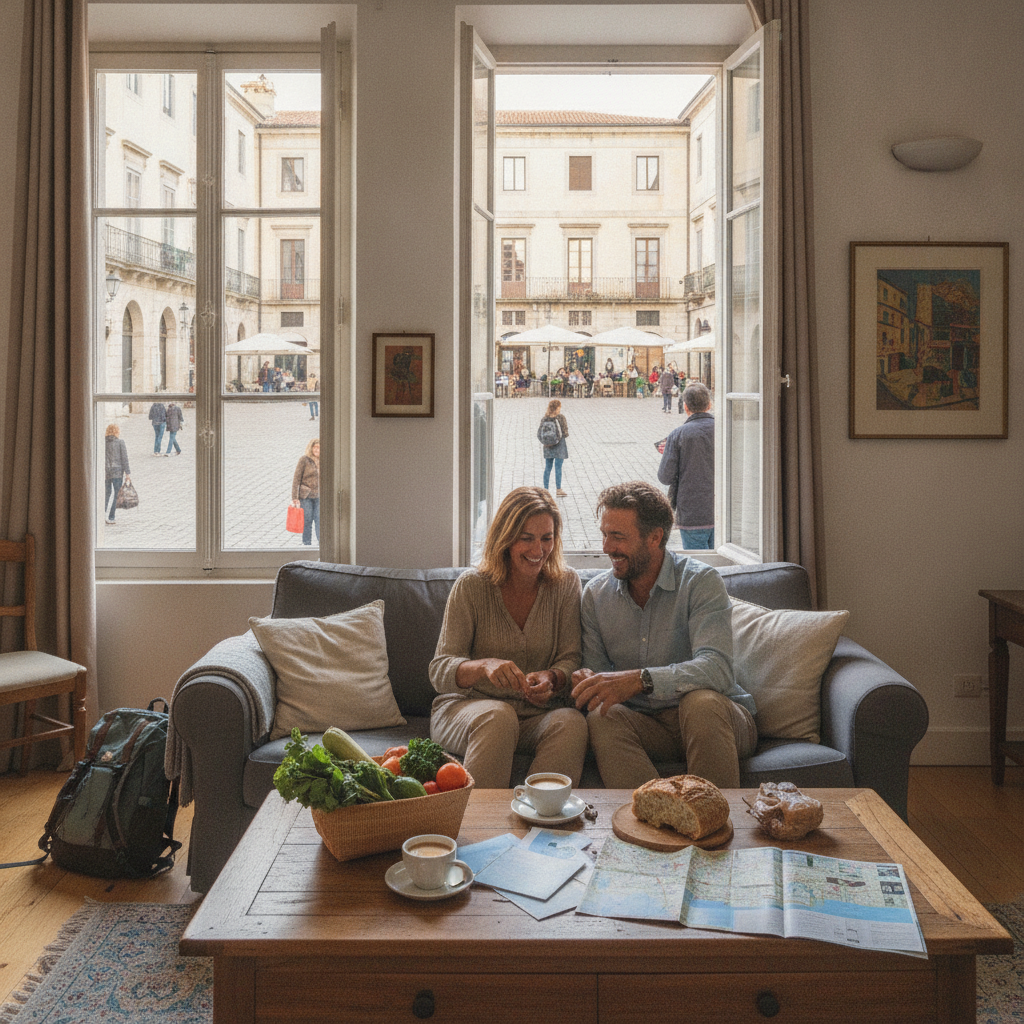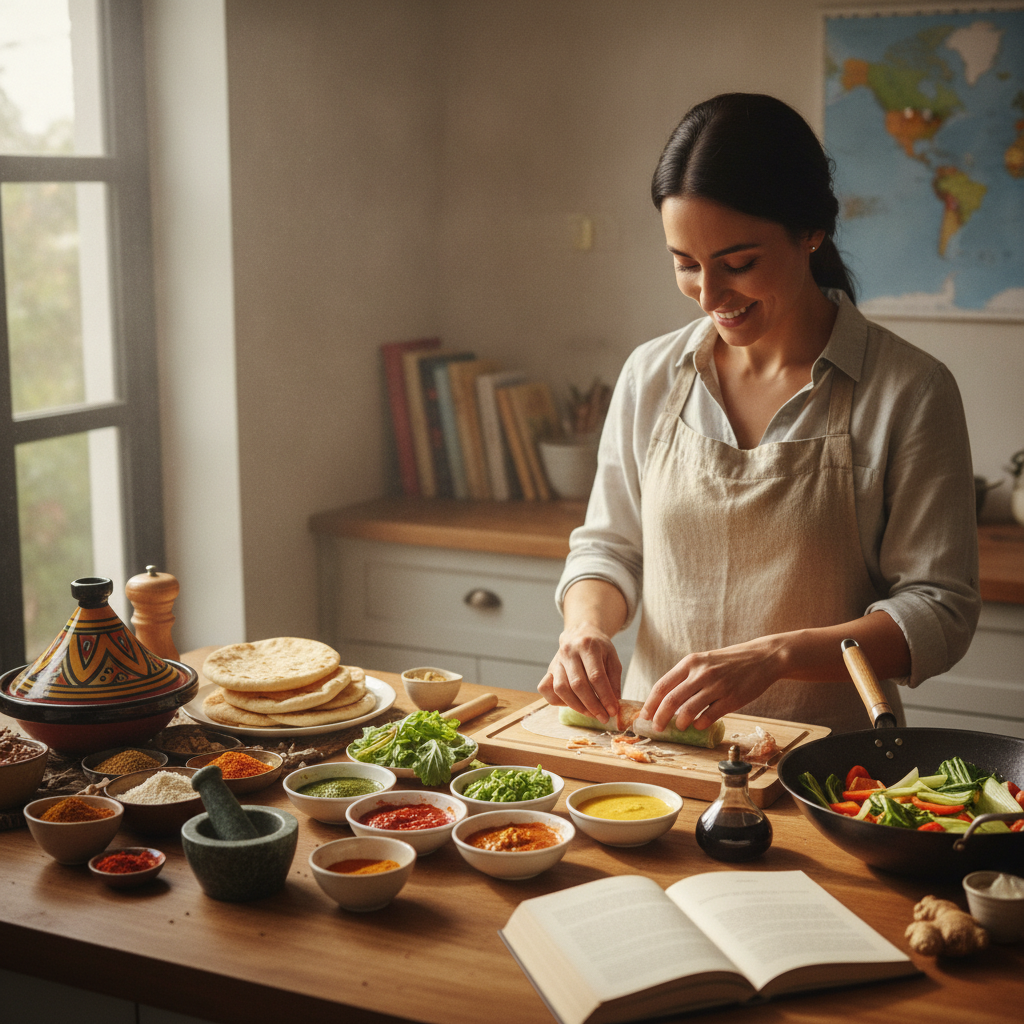
There is something quietly transformative about standing in a kitchen with an unfamiliar spice in hand and no real instinct for what comes next. The label reads *sumac* or *fenugreek* or *miso*, and the moment carries a particular kind of productive discomfort — the kind that signals genuine learning is underway. For most home cooks, the repertoire tends to narrow over time rather than expand. Familiarity breeds comfort, comfort breeds repetition, and before long the same eight dishes are rotating through the week like clockwork. That narrowing isn't laziness; it's human nature. But it also means that one of the richest available paths to both cultural understanding and practical skill goes largely unexplored.
The Kitchen as a Window Into Somewhere Else
Cuisine is never just food. Every dish carries within it a particular geography, a set of agricultural realities, a history of trade and migration and necessity. Ethiopian *injera* — the spongy, fermented flatbread made from teff flour and used as both plate and utensil — reflects centuries of communal eating culture and a grain native to the Horn of Africa. Japanese *dashi*, the foundational stock built from kombu seaweed and dried bonito flakes, speaks to an entire philosophy of flavor known as *umami*, which prizes depth over intensity. When a home cook attempts these dishes, they're not just following a recipe. They're entering into a conversation with a culinary tradition that predates them by generations, and that conversation has a way of opening genuine curiosity about the broader culture it comes from. The kitchen becomes, almost incidentally, a geography lesson.
This kind of curiosity tends to compound on itself in unexpected ways. Someone who spends an afternoon making Moroccan *chermoula* — a vibrant herb and spice marinade common across North African cooking — may find themselves later browsing a documentary about Marrakech, or seeking out a local North African restaurant to compare their results against a professional's hand. The dish becomes a doorway. Over time, that series of monthly doorways accumulates into something resembling genuine cultural literacy, built not through formal study but through the repeated, sensory experience of cooking and eating across traditions. Apps like Yummly and platforms like NYT Cooking offer well-curated recipe collections organized by cuisine, making it reasonably simple to find reliable starting points without needing a specialty cookbook for every tradition.
How Discomfort in the Kitchen Builds Real Competence
There is a specific kind of confidence that comes only from having made mistakes in unfamiliar territory and recovered from them. The home cook who attempts a Vietnamese *pho* broth for the first time — charring ginger and onion, toasting star anise and cinnamon, managing a long simmer — may not produce a perfect bowl on the first attempt. But they will leave that afternoon understanding heat management, the behavior of whole spices, and the way a broth develops complexity over time, in a way that no amount of reading could fully convey. Difficulty, when it's contained and low-stakes, is one of the most efficient teachers available.
Over several months of this practice, skills accumulate in ways the cook may not consciously notice. Knife technique improves because different cuisines demand different cuts — the julienned vegetables of a Thai papaya salad require a precision that broadens the general skill set. Sauce-making intuition deepens because French, Indian, and Mexican traditions each approach the relationship between fat, acid, and heat differently. The cook who has worked across these traditions, even superficially, develops a more flexible mental model of how cooking works at a fundamental level. That flexibility is what separates a competent cook from a merely practiced one.
Choosing a New Cuisine With Intention
The monthly choice of cuisine need not be random, and it benefits from a small amount of planning. Some home cooks find it useful to rotate by region — spending one month on West African cooking, the next on Central American, then Scandinavian — building a kind of global survey over the course of a year. Others prefer to follow personal curiosity wherever it leads, choosing a cuisine because of a recently watched film, a conversation with a colleague, or a neighborhood restaurant that sparked interest. Either approach works. What matters more is the commitment to actually cooking, not just researching. Reading about Georgian *khachapuri* — the cheese-filled bread of the South Caucasus — is interesting. Making it, with its particular egg-enriched dough and *suluguni* cheese filling, teaches something reading cannot.
Accessibility matters here too, both in terms of ingredients and technique. Most cities with a reasonable international grocery presence — places like H Mart for Korean and pan-Asian pantry staples, or a well-stocked Latin market — can supply the foundational ingredients for a wide range of cuisines without requiring specialty imports. Starting with dishes that are somewhat forgiving in their technique, before moving toward more exacting preparations, keeps the practice sustainable rather than discouraging.
Building a Practice That Stays With You
For those ready to make this a genuine monthly habit, the approach is simpler than it might seem. Choose one cuisine. Select one or two dishes from that tradition — ideally a main and a simple side or condiment. Source the key ingredients, treat the cooking session as an unhurried afternoon, and resist the impulse to substitute familiar ingredients for unfamiliar ones where it matters. The substitutions will come naturally with experience; at the beginning, fidelity to the original serves the purpose of genuine exploration. Keep notes, even informal ones, about what worked and what surprised you. Over twelve months, those notes become a personal record of a journey across the world's kitchens — and a quiet testament to how much more capable you've become without ever formally setting out to improve.
The kitchen where that first unfamiliar spice label read like a foreign language eventually becomes a place of wider possibility. The discomfort doesn't disappear entirely, but it changes in character — it becomes the pleasant uncertainty of curiosity rather than the anxious uncertainty of incompetence. That shift, accumulated one cuisine at a time, is modest in any given month and quietly profound across a year.