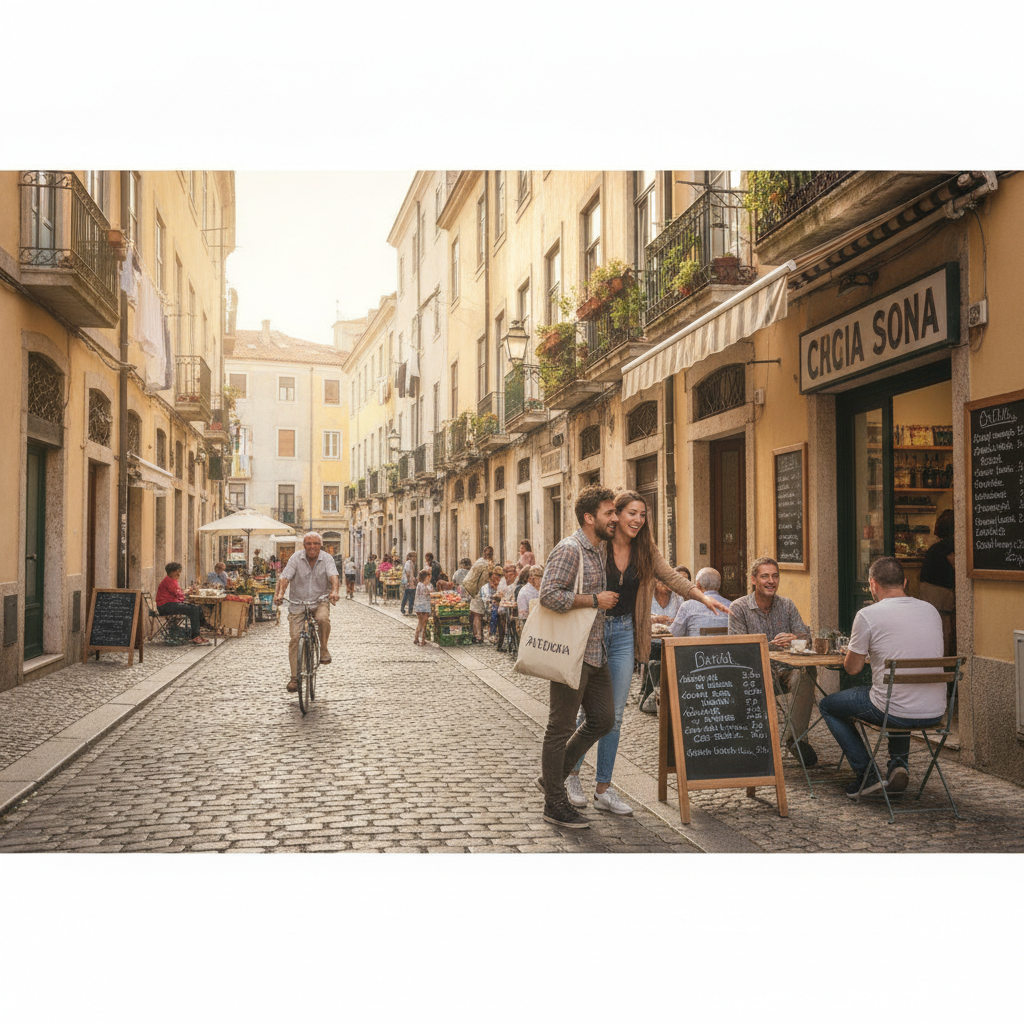
The most expensive square meters in any city are almost always the ones closest to the postcard view. Travelers who book accommodation right next to the Eiffel Tower, the Colosseum, or Times Square pay a premium that rarely reflects the quality of the stay — it reflects the proximity to familiarity. Stepping one or two neighborhoods away from that gravitational center changes the math entirely, both financially and experientially.
Research the City's Neighborhood Map Before You Search
Before opening any booking platform, spend twenty minutes studying how a city is actually organized. Most destinations have a well-documented tourist core — think Rome's Historic Centre or Barcelona's Gothic Quarter — and then a ring of residential or mixed neighborhoods just beyond it. Apps like Google Maps and resources like Lonely Planet's neighborhood guides can help you identify areas with solid transit links and local infrastructure. Understanding that structure first means you can search with intention rather than defaulting to whatever comes up first in a filtered results list.
Calculate the Real Cost of a Central Location
Central accommodation often looks reasonable until you factor in what you're actually paying for. A room near a major landmark frequently costs thirty to fifty percent more than a comparable room two metro stops away, without offering meaningfully better amenities. That difference compounds across multiple nights. Before booking anywhere, run a quick comparison: pull rates for your first-choice neighborhood, then search a secondary area nearby. The gap you see is money that could fund meals, day trips, or simply a more comfortable budget overall for the rest of the trip.
Prioritize Transit Access Over Walking Distance to Sights
The strongest argument for staying centrally is convenience — you can walk everywhere. But in most mid-sized and large cities, that argument doesn't hold up under scrutiny. A neighborhood with a reliable metro, tram, or bus connection puts you fifteen minutes from the major sights anyway, and you spend the rest of your time somewhere that actually functions as a real part of the city. Istanbul's Kadıköy district on the Asian side, for example, sits a short ferry ride from the tourist-heavy Sultanahmet area but operates at an entirely different pace and price point.
Use Booking Platforms to Filter by Transit Score
Platforms like Booking.com and Hostelworld allow you to filter properties by proximity to transit stations, not just by distance from landmarks. Use that feature deliberately. Set your search area around a secondary neighborhood and then verify the transit options before committing. You're looking for properties within a five-to-ten-minute walk of a reliable connection into the city center. That combination — lower nightly rate plus functional transit — is where the real value lives, and it's available in virtually every major destination worth visiting.
Read Reviews for Local Context, Not Just Cleanliness
Reviews for properties in non-tourist neighborhoods often contain useful signals that central-area reviews don't. Guests mention the café downstairs, the Saturday market around the corner, the bakery that opens at six in the morning. Those details tell you something real about the texture of daily life in that area. A property in Lisbon's Mouraria neighborhood or Buenos Aires' Villa Crespo will generate reviews that read differently from a hotel near the cruise port — they describe a place people actually inhabited rather than just slept in between tours.
Factor in Meal and Coffee Costs as Part of Your Lodging Decision
Where you sleep largely determines where you eat breakfast and grab your morning coffee. In tourist-center neighborhoods, even simple meals carry a location surcharge — you're paying for the foot traffic, not the food. In residential neighborhoods, the same coffee and pastry often costs a fraction of what it would in a tourist corridor. Over a week-long trip, that daily difference adds up to a meaningful amount. Choosing accommodation in a working neighborhood isn't just a lodging decision; it's quietly a food budget decision too.
Give Yourself One Day to Explore Your Base Neighborhood
One of the most practical things you can do after arriving is spend a morning or afternoon simply walking your immediate surroundings before heading to any major sight. You'll find the grocery store, the pharmacy, the local trattoria or izakaya that doesn't appear in any guidebook, and the rhythm of how people actually move through that part of the city. That orientation pays dividends across the whole trip. You stop feeling like a visitor passing through and start experiencing the place with a bit more depth and ease.
Verify Safety and Walkability With Specific Searches
A legitimate concern with secondary neighborhoods is unfamiliarity — you don't know the area and can't assess it intuitively the way you could somewhere more documented. The solution is specific research. Search the neighborhood name alongside words like "safe," "walkable," or "expat" to surface forum discussions and travel blog posts that give honest assessments. Reddit's r/travel community and city-specific subreddits are particularly reliable for candid, recent perspectives. You're not looking for perfection — you're looking for a clear picture of what to expect.
Staying outside a city's tourist center isn't a compromise — it's often the smarter version of the same trip. The lodging costs are lower, the meals are more affordable, and the daily experience of the city feels more grounded and less staged. With a bit of upfront research and a willingness to use public transit like a local, you get more of the city for less of your budget, which is about as good a travel outcome as there is.