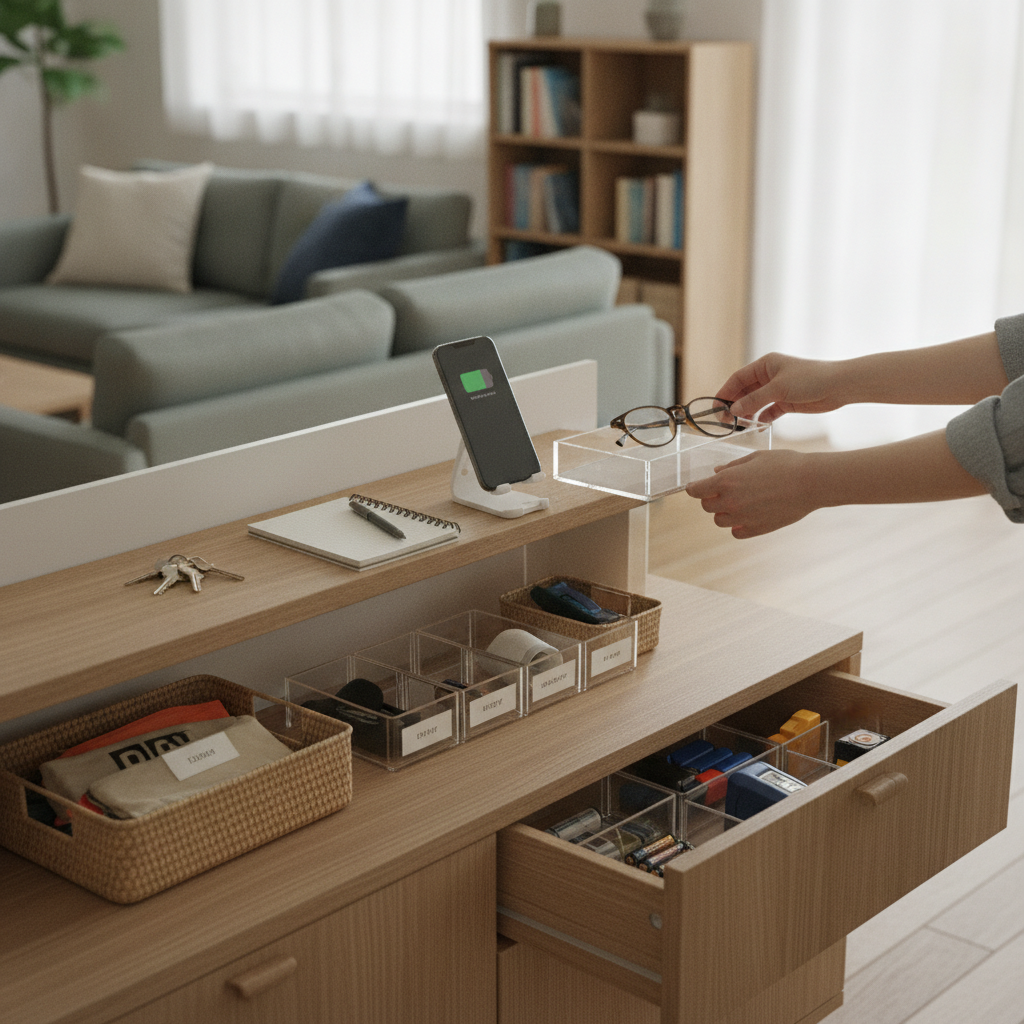
Every few minutes lost searching for scissors, a phone charger, or the right lid for a container adds up into something genuinely exhausting. It's not the big disorganization that wears people down — it's the small, repeated friction of not knowing exactly where something lives. The good news is that one structural shift can quietly eliminate most of that friction: giving every object in your home a fixed, intentional location based on how often you actually use it.
Start by Mapping How You Actually Move Through Your Home
Before you rearrange a single drawer, spend a day or two noticing where you naturally reach and what you reach for most. The spots where you drop your keys, set your coffee mug, or charge your phone aren't random — they're behavioral patterns. Working with those patterns instead of against them is the foundation of a frictionless home. Apps like Notion or even a simple notes app work well for logging this casually over a couple of days. You're not auditing your habits to judge them; you're using them as a map.
Divide Items Into Three Frequency Tiers Before Placing Anything
The most practical organizing framework divides items into daily, weekly, and occasional categories. Daily-use items belong at arm's reach, at counter height, and in the first drawer you'd naturally open. Weekly items can live slightly farther away — a cabinet shelf, a second drawer, a labeled bin. Occasional items go in storage: high shelves, under-bed boxes, or a dedicated closet zone. The Container Store's classic drawer divider systems work well for enforcing this tiering without overcomplicating things. When each tier has its own spatial logic, retrieval becomes automatic rather than deliberate.
Anchor High-Frequency Items to the Point of Use
The key insight behind frequency-based placement is point-of-use storage: items live where you use them, not where they "belong" in some abstract organizational sense. Coffee supplies stay at the coffee station, not across the kitchen near the pantry. A pair of scissors lives in the home office if that's where you cut things, and a second pair lives in the kitchen if that's where you open packages. IKEA's RÅSKOG cart has become popular precisely because it lets households create mobile point-of-use stations that move with actual behavior rather than fighting it.
Give Low-Frequency Items a Designated Zone Away From Daily Traffic
Items you reach for once a month or less create the most chaos when they share space with daily-use items. Holiday decorations, specialty kitchen equipment, extra linens, and seasonal gear all need a home that's clearly separate from your active zones. Garage shelving, labeled bins in a spare closet, or an under-stair storage system from a brand like Rubbermaid can absorb these items cleanly. The goal isn't to make occasional items hard to access — it's to keep them from cluttering the spaces where you make decisions and move quickly every morning.
Label Everything, Even If You Think You'll Remember
One of the most underestimated steps in this process is labeling. Memory is surprisingly unreliable under cognitive load — meaning when you're tired, rushed, or distracted, you revert to scanning rather than retrieving. A label on a bin, a drawer, or a shelf removes that decision entirely. Label makers from Brother make this genuinely fast and tidy, but even hand-written masking tape labels work. The act of labeling also commits you to the system: when a drawer says "batteries and small tools," you're far less likely to toss something random inside it.
Use the Outbox Method to Handle Items Without a Designated Home
Every home has objects that resist categorization — things you're keeping but haven't placed, things gifted but not yet decided on, or items mid-project that don't fit anywhere cleanly. Rather than letting these colonize your counters, create a dedicated outbox zone: a single basket or shelf where unassigned items live temporarily. Once a week, that zone gets cleared. Everything either earns a permanent home or leaves the house. This method keeps the rest of your system clean without demanding perfection in the moment. Muji's stackable acrylic boxes work well for this kind of transitional holding space.
Revisit and Adjust the System as Seasons and Habits Change
A placement system built in spring might not serve you well in winter, and a home with a new baby or a new work-from-home arrangement needs different logic than it did before. Building in a light quarterly review — just thirty minutes of noticing what's out of place or being retrieved inefficiently — keeps the system from going stale. You don't need to rebuild from scratch; you just need to notice what's drifting and reassign accordingly. A home organization system that gets adjusted stays useful. One that gets ignored quietly collapses back into friction.
Let the Permanent Home Rule Become a Household Habit
The final piece isn't physical — it's behavioral. Once every item has a designated location, the shared household rule becomes simple: things go back where they came from, not where it's convenient to set them down. This habit takes a few weeks to solidify, but it compounds quickly. When everyone in a home operates on the same placement logic, search friction essentially disappears. Nobody is hunting for the tape measure or asking where the charger went. The system holds itself up because the logic is transparent and consistent.
Organization methods built around frequency and point-of-use placement represent a meaningful shift from aesthetic-focused tidying to functional design. As more people work from home and spend more time in their living spaces, the demand for genuinely frictionless environments is reshaping how households think about storage and flow. The homes that function best aren't necessarily the ones with the most storage — they're the ones where every item has a clear, logical address, and getting back to baseline takes almost no effort at all.